Legislators / Nelson T. Abbott
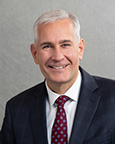
Nelson T. Abbott
Republican · House District 57
Hear from them directly
Contact Rep. Nelson T. Abbott
- Email: nabbott@le.utah.gov
- Phone: 385-358-3269
- Office: 195 S Palisade Dr., Orem, UT, 84097
Constituents get priority, so say you live in their district. Writing about a specific bill? Open it and use Take action for a ready-to-send message.
Watch or join a meeting
Every committee hearing and floor session is open to the public and streamed live on le.utah.gov. Each committee's agenda has the link to watch or join online, and how to sign up for public comment.
Nelson T. Abbott serves on:
- General Government Appropriations Subcommittee
- House Health and Human Services Committee
- House Judiciary Committee
- Health and Human Services Interim Committee
- Judiciary Interim Committee
What they've said
118 remarks on 34 billsS.B. 292 Autonomous Systems Amendments · House floor debate (day 45) · Mar 6, 2026
Asks to yield to the sponsor for a series of questions.
▶ Watch at 1:13:26Read what they said
Thank you. Uh, I will sponsor yield to a series of questions. Will the Sponsor yield to a series of questions? Yes, Yes. Okay. So
S.B. 292 Autonomous Systems Amendments · House floor debate (day 45) · Mar 6, 2026
Asks where the $100,000 cap figure comes from, noting that the cap applies to injuries to people but not to economic damages such as vehicle costs.
▶ Watch at 1:13:35Read what they said
I'm wondering about the a hundred thousand dollars cap, um, as a, you know, legislature and as conservatives, I think we value people and relationships and, um, you know, that type of thing. But we don't cap the economic damages. We only cap non-economic damages. So the, the, the damage cap is on injury to people. But for example, if somebody's car is damaged and that car costs more than a hundred thousand, we'd say we need to protect that because we highly value that. But if somebody's caused to be quadriplegic or they lose an arm or, you know, whatever it is that the most anybody should ever be compensated is a hundred thousand. And I'm wondering, where does …
S.B. 292 Autonomous Systems Amendments · House floor debate (day 45) · Mar 6, 2026
Expresses concern about the message sent by setting different limits for damage to property and for injuries to people.
▶ Watch at 1:16:27Read what they said
Thank you. I just am concerned of the message that we send to the world when we adopt disparities like this, for example, saying, well, we value money, we value vehicles, we value whatever it is. Maybe a store front's been damaged and it costs $200,000 to fix that. We value that, but we don't value humans. And as a conservative, I do value humans. I think that goes to whether the person is born or not. We value them what, you know, whoever they are. And I worry about the message that we send when we make these kind of distinctions in these laws.
S.B. 242 Transportation Amendments · House floor debate (day 45) · Mar 6, 2026
Raises concern that the bill covers multiple subjects, including tow trucks, food trucks, equipment purchasing, electric vehicles, school buses, and taxes, which he says conflicts with the single-subject rule.
▶ Watch at 2:13:07Read what they said
Thank you, Mr. Speaker. I have some concerns about this bill. And I guess my major concern is we have, it's, my understanding is the constitutional provision, but also rules that say that a bill should cover one subject. Now this says transportation, but we've got tow trucks, food trucks, purchasing of equipment, electric vehicles, school buses. Um, I'm trying to remember what else is in there, but there's, there's something to do with taxes in there. There's a lot in this bill. And in my mind, this actually, it exceeds one issue. It, it is so broad and big that it doesn't meet with our rules or the Constitution to say one bill, one subject. And so for that …
S.B. 242 Transportation Amendments · House floor debate (day 45) · Mar 6, 2026
Raises concern that the bill covers multiple subjects, including tow trucks, food trucks, equipment, electric vehicles, school buses and taxes, and may violate the one-subject rule.
▶ Watch at 2:13:07Read what they said
Thank you, Mr. Speaker. I have some concerns about this bill. And I guess my major concern is we have, it's, my understanding is the constitutional provision, but also rules that say that a bill should cover one subject. Now this says transportation, but we've got tow trucks, food trucks, purchasing of equipment, electric vehicles, school buses. Um, I'm trying to remember what else is in there, but there's, there's something to do with taxes in there. There's a lot in this bill. And in my mind, this actually, it exceeds one issue. It, it is so broad and big that it doesn't meet with our rules or the Constitution to say one bill, one subject. And so for that …
H.B. 207 Competency Amendments · House floor debate (day 44) · Mar 5, 2026
Explains that the Senate amendment fixes a technical error so that administrative medication orders, like court-ordered ones, are transferable between facilities.
▶ Watch at 36:36Read what they said
Yes. When this got to the Senate side, we realized that there was, uh, just a little technical error where as you may recall, we were trying to make, um, medication orders transferable amongst facilities and we realized that we had made court ordered medication orders transferable but not administrative court or not administrative orders transferable. So this fixes that so that both become transferrable. Thank you Representative Abbott.
H.B. 2 New Fiscal Year Supplemental Appropriations · House floor debate (day 42) · Mar 3, 2026
Asks the House to circle the bill so he can bring up an amendment to remove $10 million for the Pioneer Trail, saying it grew from a smaller amount and that state money should go back to taxpayers instead.
▶ Watch at 34:55Read what they said
Yes. I have a, an amendment that has been in work for probably, I don't know, 30 minutes or an hour. And it's not quite up on the board and it's a little more complicated because what I, in looking at this, uh, last night, I realized for the first time that we're spending $10 million to build what's called a Pioneer trail. And, um, that has grown over the years. It started is my understanding, it started at 1 million and it Uintah 2 million. And, um, the subcommittees voted not to fund it, but it ended up in our budget as 10 million. It's not easy to do a voice amendment on that because, um, it's spread out. …
H.B. 2 New Fiscal Year Supplemental Appropriations · House floor debate (day 42) · Mar 3, 2026
Asks for a few minutes for the amendment to be brought up and says legislators were elected to keep government small and be responsible with public money.
▶ Watch at 43:19Read what they said
No, thank you. I'm just asking for a couple minutes for the amendment to come up. While, while we're talking, the, the drafter called me, I didn't answer because I didn't feel that was appropriate and that I'm standing right here. But it shouldn't be long. And then we can, I think, have an appropriate debate. I think each one of us was elected by our constituents to keep the government small and to really be responsible with the money that they've entrusted to us. And I think each one of us owes it to our constituents to do that for them. And, um, I understand that others have negotiated this and, you know, whatnot, but I think we personally …
H.B. 207 Competency Amendments · Senate Judiciary, Law Enforcement, and Criminal Justice Committee · Feb 27, 2026
Presents the second substitute, which makes a technical correction and changes procedure for competency evaluations, including ordering two evaluations at once, clinically appropriate placement, and continuity of medication orders after transfers.
▶ Watch at 2:02:53Read what they said
Perfect. So the diff the second sub just makes a technical correction that we realized was wrong on here. Okay. But what this, what this bill does is it requires, uh, it, it, so basically it changes the procedure, but not the substance of competency evaluations. So, for example, sometimes, uh, the state may want, or the state may need to pay for two competency evaluations. Maybe it's a higher level of crime or, you know, whatever it is. And sometimes maybe they only need one. This just says, if you need two, ask for 'em at the same time, don't do one, and then come back and get the second one later. Um, it, let's see. It talks about …
H.B. 207 Competency Amendments · Senate Judiciary, Law Enforcement, and Criminal Justice Committee · Feb 27, 2026
Responds that he understands much of the subject but has some parts he is still working through, and has brought a resource to consult.
▶ Watch at 2:04:10Read what they said
Uh, that's a loaded question there, isn't it? Um, I've, I think I understand a lot of this, but there's still some parts that, and so I did bring a lifeline here, if you guys have we tough
S.B. 154 Protection and Advocacy Agency Reporting · House Health and Human Services Committee · Feb 27, 2026
Asked what authority the state has to require reporting from a private organization that receives no state funding.
▶ Watch at 1:25:02Read what they said
Thank you, Madam Chair. I do have a question. It's my understanding that we provide absolutely no funding to this organization. So what gives us the right as a state to either suggest or require them to perform certain actions? I mean, 'cause we could do that to any advocacy agency out there. Mm-hmm. And so where do we derive the, whether it's legal or just the moral authority to require an, uh, a completely independent age, uh, organization to do this?
S.B. 154 Protection and Advocacy Agency Reporting · House Health and Human Services Committee · Feb 27, 2026
Asked whether the state provides any funding to the designated agency.
▶ Watch at 1:26:04Read what they said
Uh, when you're gonna designate them as the state's official designated agency, do we actually provide any funding to them?
S.B. 154 Protection and Advocacy Agency Reporting · House Health and Human Services Committee · Feb 27, 2026
Said the state has no funding role with the Disability Law Center, that the governor's designation is the only connection, and that the bill is not appropriate legislative action.
▶ Watch at 1:32:09Read what they said
Yes. So, you know, we have an interesting relationship with the Disability law center. We see them up here a lot. They advocate for positions. Sometimes we agree with their position, sometimes we don't. Sometimes, um, we think that they're making the right decisions in regards to which cha cases they choose to proceed. And sometimes we don't. Sometimes they actually sue the state and maybe we don't like that, but they serve a function, right? And we don't give them any funding. They're not a state agency. They don't have, the only connection they have with the state is that the governor has designated them as, and I don't, can't remember the exact language, but the governor's designated them …
S.B. 154 Protection and Advocacy Agency Reporting · House Health and Human Services Committee · Feb 27, 2026
Argued that requiring a privately funded organization to report to the state sets a poor precedent and imposes costs on it.
▶ Watch at 1:35:41Read what they said
Okay. Thank you. I think we need to step back and say, what precedent are we setting here? If the governor chooses to recognize an organization but gives absolutely no funding, no support, nothing does that give us the right as a state to regulate them and to either require or encourage them to report to us and to do this and that, et cetera, et cetera. It's a terrible precedent. It's not a conservative principle. It's not the way we should be acting as a legislature. We need to let outside groups that don't take State Money act independently of us. If the governor says, you know what, I'm, maybe I wanna change my designation. He can ask and …
H.B. 363 Water Easement Amendments · House floor debate (day 38) · Feb 27, 2026
Moves to adopt House Amendment One in his name to the bill.
▶ Watch at 23:34Read what they said
Representative Abbott. Thank You Mr. Speaker. Motion to adopt house amendment one in my name.
H.B. 363 Water Easement Amendments · House floor debate (day 38) · Feb 27, 2026
Says the amendment makes clear the bill does not affect water rights or easements in rural parts of the state.
▶ Watch at 23:45Read what they said
Yes. This amendment makes it clear that this bill does not touch or mess with water rights in rural parts of the state or with easements in rural parts of the state.
H.B. 363 Water Easement Amendments · House floor debate (day 38) · Feb 27, 2026
Explains that canals along the Wasatch Front are shared by several easement holders, and the bill gives municipalities and service districts a first right to obtain an abandoned canal company's easement, with property owners able to object.
▶ Watch at 24:25Read what they said
Thank you. So, uh, along the Wasatch front, we are switching from a more agrarian society to more, uh, suburban or even urban society. So we have a bunch of canals that run through our communities, and those canals are now used for multiple purposes. One purpose would be to convey irrigation water. And those rights are held by canal companies for the most part. Uh, most of those easements that the canal companies hold are prescriptive easements, meaning that they're not recorded at the county recorder's office, but that they're just established by long use. Other entities hold oftentimes hold easements on the same canal. For example, a municipality might have an easement to run storm water. A service …
H.B. 363 Water Easement Amendments · House floor debate (day 38) · Feb 27, 2026
Responds that the easement holder cannot increase the burden on the property owner and that existing law limits such changes.
▶ Watch at 27:28Read what they said
So they can't change the burden on the property owner. So if, if a road was more burdensome, then they would be prohibited from doing that. But what they could do, for example, is a special district could say we're, we're going to use that canal to convey water to a water treatment facility. Right? So it gives some flexibility. A city could say, we're going to use this to convey storm water to a river or a lake, right? They could potentially, I suppose, um, say, well, we think it's consistent to do more than that. And that would be between, you know, that would potentially, I guess, I mean they can always do that. And so, but we …
H.B. 572 Behavioral Health, Mental Health, and Social Services Amendments · House floor debate (day 38) · Feb 27, 2026
Supports the bill and thanks the sponsor for the third substitute.
▶ Watch at 1:24:52Read what they said
Thank you. I, I rise in support of this bill. I appreciate the hard work that the sponsor has done and I do believe that this is a good step in the right direction. I appreciate his work on the third sub. I think that makes it even better, so thank you.
H.B. 572 Behavioral Health, Mental Health, and Social Services Amendments · House floor debate (day 38) · Feb 27, 2026
Supports the bill as a good step in the right direction and appreciates the sponsor's work on the third substitute.
▶ Watch at 1:24:52Read what they said
Thank you. I, I rise in support of this bill. I appreciate the hard work that the sponsor has done and I do believe that this is a good step in the right direction. I appreciate his work on the third sub. I think that makes it even better, so thank you.
S.B. 233 Judicial Performance Evaluation Amendments · House Judiciary Committee · Feb 26, 2026
Asks whether the standard requires justices to distribute a first draft of opinions to other justices within set days after oral argument.
▶ Watch at 55:45Read what they said
Thank you. Uh, I do have a question about these lines that we're talking about here. As I read this, it's requiring the justices, so they, they hear, have a case. Yes. They hear oral arguments, and then the clock starts ticking. So within, um, 150 days, 75% of opinions have to be first draft and distribute. The first draft has to be distributed to other justices.
S.B. 233 Judicial Performance Evaluation Amendments · House Judiciary Committee · Feb 26, 2026
Asks whether there is a deadline for the final opinion.
▶ Watch at 56:20Read what they said
So the, the, the actual final opinion may not, is there anything in there about a deadline on the final opinion?
S.B. 92 Prosecution Amendments · House Judiciary Committee · Feb 26, 2026
Asks about the bill's sentencing language, specifically the court's authority to reduce the minimum sentence.
▶ Watch at 1:16:12Read what they said
Thank you. So I'm just looking at the sentencing provisions, uh, five A and BI guess. So I'm, what's confusing me is it says, uh, it says the court may reduce the minimum sentence. So I guess the, and I assume because it's a, because conviction of a more serious crime, they can increase the sentence. So is it just kind of wide open,
H.B. 466 Utah Rural Jobs Act Modifications · Senate Revenue and Taxation Committee · Feb 26, 2026
Introduced the bill to extend the Utah Rural Jobs Act, which he said has run since 2017 to encourage investment in high-paying businesses outside the Wasatch Front.
▶ Watch at 2:08:13Read what they said
Thank you, Mr. Chair. And I'll invite Alex Nik to come up with me here. So one of the things that we all benefit from in this state is if we can diversify and improve the economy in rural Utah, it benefits everybody. Not only does it benefit rural Utah, but it also benefits those of us who live along the Los Wasatch front. So back in 2017, this legislature passed the Utah Rural Jobs Act, which provided an incentive for investors to invest in high paying in businesses who will provide high paying jobs off the Wasatch Front. And that program has been now running since that time, um, and it's been very successful. And so this is basically …
H.B. 466 Utah Rural Jobs Act Modifications · Senate Revenue and Taxation Committee · Feb 26, 2026
Said the program's authorized $42 million was renewed in 2022 and is nearly exhausted, and deferred to Stepanek on performance.
▶ Watch at 2:11:19Read what they said
and its success and those types of things? Yes, we Do. So lemme just clarify one thing. So when we, when we authorized this in 2017, we said it can go up to $42 million of an investment that was exhausted. We renewed it, uh, the last time we renewed it was 2022. So we've exhausted the money that we authorized in 2022, or at least I think within a month or something that will be exhausted. But the second part of your question, how has the, those investments actually performed? And I'll let Mr. Stefana answer that.
H.B. 183 Sex Designation Amendments · House Judiciary Committee · Feb 26, 2026
Says the substitute removes the custody evaluation provision.
▶ Watch at 2:30:25Read what they said
I think the sponsor spoke to this motion. This, uh, removes the part about custody evaluation or custody decisions and what the court considers.
H.B. 255 Health Care Sharing Ministry Amendments · Senate Business and Labor Committee · Feb 25, 2026
Abbott introduced amendment number two, saying it was reached after talks with industry stakeholders and Senator Musselman, and that he believes it is acceptable to them.
▶ Watch at 1:02:16Read what they said
I do. So I won't go through the whole presentation since we did it last time, but, uh, since I'll just bring you up to speed. Since then, I've reached out to the industry stakeholders and to Senator Musselman, and I think we've now landed with amendment number two in a place where, um, at least everybody can live with it. And so, I'm not gonna say everybody necessarily loves it, but I think we're, we're at a place where we're good. So I'll say that much and then you guys can ask me any questions. Yeah. And just to follow up on that, um, I did speak to Senator Musselman about it. He's presenting in another committee, but he …
H.B. 363 Water Easement Amendments · House Political Subdivisions Committee · Feb 25, 2026
Said he has a handout for the committee.
▶ Watch at 1:32:34Read what they said
Thank you. I do have a handout. I'm wondering if it's okay for my intern to
H.B. 363 Water Easement Amendments · House Political Subdivisions Committee · Feb 25, 2026
Explained that the bill sets a procedure for political subdivisions to take control of prescriptive easements left by abandoned canal companies, with landowner objection rights.
▶ Watch at 1:32:40Read what they said
Yeah. So throughout the state, we have numerous canals that convey, uh, water throughout cities and municipalities. And, um, many of these have been in existence for decades or some even over a hundred years. Occasionally. What we're finding is some of these canals go out of business, they just stop doing business. And so there's an existing procedure in code where they can file an abandonment with the county recorder. And there, uh, prescriptive easements that they've acquired over the years are reverted back to the property owners. The complication that we sometimes have is that there are other entities that have easements on those same canals. For example, a city may have used it for storm water. Um, …
H.B. 363 Water Easement Amendments · House Political Subdivisions Committee · Feb 25, 2026
Explained that a political subdivision must give notice to affected landowners, who then have 120 days to object.
▶ Watch at 1:35:09Read what they said
So, but basically the procedure is when the municipality or other political subdivision wants to take control of the easement, they have to provide notice to the adjoining land or the affected landowners, and then they get 120 days to file the objection. So there is a procedure in place.
H.B. 363 Water Easement Amendments · House Political Subdivisions Committee · Feb 25, 2026
Explained that a political subdivision acquires the canal company's easement only when it files notice, and otherwise the abandonment reverts the easement to property owners.
▶ Watch at 1:35:49Read what they said
So the, uh, political subdivision, and this is mostly going to probably be cities, but in theory it could be a county, it could be others, right? But, uh, they don't need to file a notice to preserve an existing easement that's that they already possess, right? But in order to acquire this easement that the canal company possesses and is abandoning, that's when they're triggered. They, they need to file some that document with a recorder and notice the affected landowners. If they don't do that, the abandonment is complete and it reverts back to the property owners.
H.B. 363 Water Easement Amendments · House Political Subdivisions Committee · Feb 25, 2026
Said canal companies could negotiate a sale with the municipality, and that the bill adds another mechanism.
▶ Watch at 1:37:54Read what they said
So I think, yeah, you're right. They, they could approach the municipality and try and negotiate some sort of purchase or sale. I don't think that happens that often when these canal companies abandon. Because typically, um, if you think of these canal companies, they're kind of a mutual organization, is my understanding. And so there's a ton of maybe shareholders. That's right. Although usually by the time they're abandoning, there's not a lot left. But it Also, right. So it kind of makes you wonder who do they negotiate with, who has the authority, et cetera, et cetera. So it gets a little complicated, but it's not impossible. And this doesn't prevent that from happening, but it, it provides …
H.B. 363 Water Easement Amendments · House Political Subdivisions Committee · Feb 25, 2026
Said canal companies have functioning boards that can negotiate with municipalities.
▶ Watch at 1:38:45Read what they said
And, and yes, I mean, they do have a functioning board usually, and they can negotiate with the municipality, for example.
H.B. 363 Water Easement Amendments · House Political Subdivisions Committee · Feb 25, 2026
Said the concern is legitimate, that the bill provides a path to clear title, and that cities may be more hesitant with residential owners.
▶ Watch at 1:40:14Read what they said
I haven't heard. Um, yeah, and I think that's legitimate concern. I think under this, I think the city could go out and probably accomplish that with some additional work and money to do that without this bill. But this provides a path for a municipality or, uh, say a special district, um, to acquire those rights. Right. I mean, so your, yours is maybe a unique situation. I think in a lot of these situations. They're dumping storm water into these same canals and then the, that storm water, the city would already have a preexisting use for that or easement to convey that storm water to wherever it's going to. And it gets really confusing as to how …
H.B. 363 Water Easement Amendments · House Political Subdivisions Committee · Feb 25, 2026
Explained how the bill would apply where a canal runs through several cities.
▶ Watch at 1:43:37Read what they said
Yeah, I think what this bill would do is a, the, the municipality where it's located or the, it's a little more complicated when it's say a special, uh, district, but I think they, they, it would be where they're geographically located. They would assert this, right? But I don't know, and maybe there's somebody in the room that can answer your first question better than me. And that is, you know, for example, okay, Orem, I'm from Orem. If they dump, uh, storm water in a canal and now it goes and flows into Linden, does their prescriptive easement flow through Linden? I suppose it probably does, right? But that's a pre-existing, right. That this doesn't really affect. Um, …
H.B. 363 Water Easement Amendments · House Political Subdivisions Committee · Feb 25, 2026
Explained how multiple cities would coordinate under the bill and said the two substitutes were drafted after attorney feedback.
▶ Watch at 1:44:30Read what they said
Yeah, I think what would happen under this bill would be Orem would probably file on the canal in their city boundaries, and then Linden would, if they chose to, would file it on in their city boundaries. Right? But, but the easement that Orem has to run storm water through Linden, I don't think is affected by this. So it gets, for a homeowner, it's complicated because somebody's still gotta maintain that canal so the storm water can flow through it. And that probably falls to Orem since they're the one putting storm water in. Now, if Linden's also putting storm water in, somehow those cities have to come to an agreement as to how to maintain that. But …
S.B. 161 Evaluations in Guardianship Amendments · House Judiciary Committee · Feb 25, 2026
Asked whether the court always appoints the healthcare provider or whether a guardian can hire their own expert.
▶ Watch at 1:43:14Read what they said
Okay, thank you. So I have a question. So this says the court may appoint a healthcare provider. Can the guardian go out and just hire their own expert and bring them in and have them testify? Or are they always appointed?
S.B. 213 Utah Payment of Wages Act Statute of Limitations · House Judiciary Committee · Feb 25, 2026
Said the bill is important given differing court interpretations and asked about the competing limitation periods.
▶ Watch at 2:00:03Read what they said
Thank you. So, I, I have some questions and thank you for your presentation. I think this is an important bill because obviously there's courts that have interpreted differently. Some have said the typical four year statute of limitation applies, and I assume that's because it's a verbal contract, and then others have said no, it's a one year contract. Uh, one year statute of limitation,
S.B. 213 Utah Payment of Wages Act Statute of Limitations · House Judiciary Committee · Feb 25, 2026
Posed a hypothetical about an employer suing an employee over a loan and when that statute of limitations would start to run.
▶ Watch at 2:01:03Read what they said
So I wanna look at this from a bigger perspective. 'cause typically when we have a short statute of limitations, it's because we want to discourage that type of lawsuit, right? So, for example, if the employer were to loan money to the employee, say for a uniform or whatever, and the employee was paying them back, say, $10 a month or something, um, the statute of limitations on for the employer to sue the employee would start to run when the employee made the last payment. It may be after it doesn't even start to run when they get the uniform, it doesn't start to run when they turn, uh, uh, terminate their employment, it starts to, so if …
S.B. 213 Utah Payment of Wages Act Statute of Limitations · House Judiciary Committee · Feb 25, 2026
Asked what advantages the statute provides, such as attorney fees and penalties.
▶ Watch at 2:02:59Read what they said
Okay. And the advantage you're getting under this statute is you're getting attorney's fees, you're getting a 60 days worth
S.B. 213 Utah Payment of Wages Act Statute of Limitations · House Judiciary Committee · Feb 25, 2026
Questioned whether it is justified to give employees a shorter limitation period than employers suing employees.
▶ Watch at 2:03:07Read what they said
So you're saying we're justified in giving the employee a much shorter statute of limitations because it's under the statute, whereas if the employer sues the employee, it's not under the statute, so we can give 'em four or six years or
S.B. 213 Utah Payment of Wages Act Statute of Limitations · House Judiciary Committee · Feb 25, 2026
Asked what the disadvantage would be of giving employees three or four years.
▶ Watch at 2:03:34Read what they said
And what's the disadvantage of giving an employee three years or Sure. Four years under the, under the Wage Act. So, so
S.B. 213 Utah Payment of Wages Act Statute of Limitations · House Judiciary Committee · Feb 25, 2026
Raised concern that startup employees with deferred wages could lose wages because the limit runs from when wages are earned rather than employment end.
▶ Watch at 2:04:33Read what they said
Had, I've been told, and tell me if I'm wrong on this or, or the information I've been given is incorrect because the statute of limitation begins to toll when the wage is earned, not when the employment ends or when the last wage was paid. It begins when the wage was earned. If an employee, and this is may be frequent in Utah, an employees working for a startup, they may be promised wages that aren't paid. Right. And they continue to working for that startup because they're hoping for some equity or they're hoping whatever, if the business goes outta business, they never get that wage and there's nobody to sue and it's over. But if the business …
S.B. 213 Utah Payment of Wages Act Statute of Limitations · House Judiciary Committee · Feb 25, 2026
Said he would prefer the limit start from the last wage payment and expressed serious concerns that the bill is harsh on employees.
▶ Watch at 2:06:33Read what they said
Okay. I would feel more comfortable with this bill if we changed it to start the statute of limitations at the time that the last wage was paid. I, I know you disagree with me and you don't think that how it works, say in, uh, a mortgage payment or a car payment, but I, I'm 99% sure that we told the statute of limitations until it doesn't even start to run until the last payment is made. And it seems like it ought to be the same here. As long as there's some wages being paid and there's, there's periodic payments, they're going, don't start the statute. I would feel much more comfortable with something like that than saying, …
S.B. 213 Utah Payment of Wages Act Statute of Limitations · House Judiciary Committee · Feb 25, 2026
Moved to hold the bill to resolve his concerns, suggesting it return at the next day's hearing.
▶ Watch at 2:20:39Read what they said
Make a motion that we hold this item. I don't necessarily want to kill it. I think we do need a bill in this space, but I want to resolve some of my concerns. We do have a hearing tomorrow at four, so, um, if we could put this back on the agenda, I'd love it. But anyways,
S.B. 213 Utah Payment of Wages Act Statute of Limitations · House Judiciary Committee · Feb 25, 2026
Said wages such as long-term commissions can be complex and he wants to work with the sponsor on something fairer to employees.
▶ Watch at 2:21:04Read what they said
Well, I'll Juab I'll just say further. Um, I think wages can be more complex than we think. Um, I think, yeah, sometimes people are just paid by the hour or paid by the pay period, but there's a lot of people that work on commission. The commission may not even be payable, uh, until long down the road. Right. Maybe it's contingent upon a sale being completed or whatever it is. And so we, I think there's, it's, in fact, I have a friend who was on a commission contract that didn't terminate unemployment, and they were entitled to co continue collecting commissions for several years after employment ended. I, it would be very difficult to bring a wage, …
S.B. 213 Utah Payment of Wages Act Statute of Limitations · House Judiciary Committee · Feb 25, 2026
Withdrew his motion to hold, relying on the sponsor's commitment to keep working with stakeholders.
▶ Watch at 2:24:26Read what they said
So I, I've known the sponsor for a long time, as he said, and if he tells me he'll continue to work on this, I'll withdraw my motion. We can favorably recommend it, and I'll just rely on his good faith that we'll continue to work with stakeholders and get this to a place where it's actually I, Where you feel good about It.
S.B. 112 Utah Exemptions Act Modifications · House floor debate (day 36) · Feb 25, 2026
Explains that S.B. 112 corrects the Utah Code so the earned income tax credit exemption from creditor collection also applies in chapter 7 bankruptcy, as a bankruptcy judge noted, without changing the list of exempt assets.
▶ Watch at 55:30Read what they said
Thank you you Mr. Speaker. So when somebody has a debt and they don't pay it, um, creditors are allowed to collect against certain assets. But interestingly, and it's interesting to read the bill, we make a list of things that they can't take. And for example, we give a homestead exemption. Uh, we get let them have the use of one vehicle and there's just a list of things that we say creditors can't take. Um, one of the things that we've put on the list is the earned income tax credit. And that's been in our code for a long time. But a bankruptcy judge just remarked that the way the code is written is that only applies …
H.B. 572 Behavioral Health, Mental Health, and Social Services Amendments · House Health and Human Services Committee · Feb 24, 2026
Says he wants to address the database provisions in the substitute.
▶ Watch at 1:33:15Read what they said
So I just wanted to address the issue of the database, and we've talked about this, but, um, I just wanted to express, so this is on lines of the sub, I believe.
H.B. 572 Behavioral Health, Mental Health, and Social Services Amendments · House Health and Human Services Committee · Feb 24, 2026
Supports the bill's goals but has concerns about the database, including who would use it, privacy, the breadth of temporary civil commitments, and the need for guardrails.
▶ Watch at 1:34:04Read what they said
Now I wanna talk to the second substitute. Okay, perfect. I really appreciate the work you're doing. We've had a lot of testimony today saying there's a lot of positive things in this bill. The database is what gives me heartburn right now. And we've talked, but I'm just saying this so I get this out there. So I totally agree. A database would create a lot of good, there's a lot of good that can come from this because I think law enforcement, hospitals, healthcare providers, whatever it is, would benefit by knowing information about individuals who are repeat, um, I guess customers right? With, or they interact with those organizations on a repeated basis. But what you have …
H.B. 572 Behavioral Health, Mental Health, and Social Services Amendments · House Health and Human Services Committee · Feb 24, 2026
Says he will vote no because of the database, giving an example of a temporary commitment that could be recorded, and asks for guardrails.
▶ Watch at 1:41:59Read what they said
Thank you. So, I, like I say, I like a lot of this bill and I want to vote for it. I'm gonna vote no because of this database issue. It's important enough to me, but I, I, I hope we can get it fixed. Let me just give you an example of somebody that gets picked up into this database. You got a 22-year-old young person who has some suicidal thoughts. Um, they go to the emergency room, um, they don't wanna stay. So they're placed under a temporary order of commitment. Technically, they're committed to the local mental health authority, but the local mental health authority is never notified, and that temporary order of commitment is dropped after …
S.C.R. 7 Concurrent Resolution on State Innovation for Transition from Government Benefits to Self-reliance · House Revenue and Taxation Committee · Feb 24, 2026
Expressed strong support for the resolution, citing Utah's upward mobility research and the state's tradition of its own approach to caring for residents, and said it should go further.
▶ Watch at 38:30Read what they said
Thank you, Mr. Chair. I think this is absolutely, um, fantastic. This is something that I've said to some of you here in this committee that I've been thinking about quite a bit, where I think it was Kempsey Gardner that showed the research that Utah was the leading state in the union for the most upward mobility, where the bottom 20% over the course of their lifetime is able to move up to the top 20%. We have done a great job over the years of making something pretty special here in Utah where we took care of our own. We had the highest women, uh, graduates in the nation, top volunteer nation, I mean, volunteer state in the …
H.B. 255 Health Care Sharing Ministry Amendments · Senate Business and Labor Committee · Feb 24, 2026
Presents H.B. 255, which adds a prominent written notice that health care sharing ministries are not insurance and that members' medical bills are not guaranteed, and proposes striking the word websites from the notice requirement.
▶ Watch at 47:24Read what they said
Representative Abbott. Thank you. So we have a statute in our state that recognizes Health Share ministries as a, you know, a legitimate, uh, thing. And in our current statute, we do require a notice somewhere in applications and guidelines that states certain things. This kind of adds to that notice requirement and brings us more in line with what other states are doing with Health Share ministries, because what it does is it adds the words prominently written notice. And, uh, basically what it requires is the notice needs to state this is not insurance. We are not obligated to pay your medical bills. Uh, the reason we're putting that notice in is it's actually factually true. And when …
H.B. 255 Health Care Sharing Ministry Amendments · Senate Business and Labor Committee · Feb 24, 2026
Says most states that recognize health share ministries require a substantively similar notice, and many states do not recognize them.
▶ Watch at 49:19Read what they said
Uh, there's not all other states, but most other states that actually recognize these. There's a lot of states that don't even recognize Health Share ministries, but those that recognize them require a notice that is substantively similar to this.
H.B. 255 Health Care Sharing Ministry Amendments · Senate Business and Labor Committee · Feb 24, 2026
Says the current wording is factually accurate, but that softer phrasing such as 'substantially similar' could help, and that people should understand what they are getting.
▶ Watch at 56:16Read what they said
Well, I think if the way it's written now, we are all, we are not obligated to pay your medical bills is factually accurate. And they say, well, it's the, it's the members that are obligated. No, they're not obligated either. Nobody's obligated to pay your medical bills in these plans. So I think it's factually accurate. Now I get what you're saying. Maybe something softer would be good. I think the word substantially similar, maybe help them do that. But I do think people need to go into this with their eyes wide open and know what they're getting. I, I don't mind people getting health share ministries, but when they think that they're getting a promise to pay, …
H.B. 255 Health Care Sharing Ministry Amendments · Senate Business and Labor Committee · Feb 24, 2026
Agrees to work with Sen. Musselman to resolve issues and return to the bill the next day.
▶ Watch at 59:27Read what they said
Fine. We can come back if you, I'd love to come back tomorrow 'cause I'll work with Rep or Senator Musselman and see if we can resolve our issues. But, uh, I I think that's appropriate.
H.B. 487 Legislative Branch Amendments · House Judiciary Committee · Feb 23, 2026
Asks whether struck sections on code revision authority are restated elsewhere or whether the listed actions are existing code.
▶ Watch at 56:25Read what they said
Thank you. I do, I should have asked this during clarifying questions, but, um, looking at the second sub first sub, uh, sorry, the first sub, the authority to revise code, I see that a large section is crossed out there, and then it's more or less restated a little bit later. But I was looking at some of these things and I'm just wondering, um, is this intended to be basically exactly what was struck out in the other section? There's no changes because on some of these, you look and it says, for example, rearranging sections or even deleting sections. There's a few things in there that kind of caught my eye, and I'm just wondering, are those …
H.B. 555 Changes to Family Law Actions · House Judiciary Committee · Feb 23, 2026
Rep. Abbott asked how the bill would change attorney fee awards on temporary orders and what finding the judge would have to make.
▶ Watch at 1:04:00Read what they said
Thank you. So I do have a couple questions. So, current practice right now is that in temporary orders, attorney's fees are not awarded or what's, what's really happening in the courts today? So right now it says that may be awarded, um, on temporary orders and this, um, this language would, would change it, it still may be awarded, but, um, does direct the, um, judge to consider the ability of the parties to pay and then to enter a specific finding. Okay. So really the difference is just the judge has to make that finding?
H.B. 555 Changes to Family Law Actions · House Judiciary Committee · Feb 23, 2026
Rep. Abbott asked about the change from 'shall' to 'may' and the removal of the word 'substantially' in the bill.
▶ Watch at 1:04:38Read what they said
Thank you. Next part I wanted to ask about was in lines 57 and 58 and 59. So you're, you're replacing shall with May and I get what you're doing there, but then you take out the word substantially.
H.B. 555 Changes to Family Law Actions · House Judiciary Committee · Feb 23, 2026
Rep. Abbott confirmed that restoring the word 'substantially' was the point of his question and asked about the amendment number.
▶ Watch at 1:04:58Read what they said
Okay. That's what, that was my question. Okay. All it's like house amendment one. Is that House Amendment one Millard?
H.B. 555 Changes to Family Law Actions · House Judiciary Committee · Feb 23, 2026
Rep. Abbott said he supports the motion and asked whether the bill could account for inadvertent violations or good-faith arguments.
▶ Watch at 1:23:52Read what they said
Yes. Thank you. So I, I actually support that motion. I, it's interesting listening to the stories that have been given here. Almost every story is saying this process is being abused and we need attorney's fees. And it sounds like, and I don't know this area of the law and I never practiced in divorce court, so I don't know, but it sounds like, and I've heard, yeah, that's absolutely a valid concern and it's something we need to address. So I appreciate you bringing this motion or this bill to kind of address that. Um, I do wonder if there are cases though, where people inadvertently violate a custody order or they, um, actually have a really strong …
S.B. 109 Alienation of Affection Amendments · House Judiciary Committee · Feb 23, 2026
Asks how many successful alienation of affections cases there have been in Utah over the past 20 to 30 years.
▶ Watch at 1:43:25Read what they said
Thank you. Couple questions. I, first of all, I'll say I appreciate how short this bill is. I like that. Thank you. Thank you. Um, I'm wondering why you reserved parts for definitions, but then I heard your presentation and I understand maybe later you need to add hussy homewrecker, um, Rodar cat, So I appreciate that. Yeah. My question is, how many, uh, successful causes of action have there been in Utah, say in the past 20, 30 years? I
S.B. 109 Alienation of Affection Amendments · House Judiciary Committee · Feb 23, 2026
Says Utah Supreme Court decisions have upheld this cause of action in several cases.
▶ Watch at 1:44:30Read what they said
Yeah. Um, I was just wondering about that because I mean, just Googling, I saw three cases that Uintah the Utah Supreme Court where they upheld it over and over. Yeah.
S.B. 109 Alienation of Affection Amendments · House Judiciary Committee · Feb 23, 2026
Says the Supreme Court treats the claim as compensation for loss, and states a preference for keeping the common law history.
▶ Watch at 1:46:21Read what they said
Okay. I appreciate that. I think, you know, just because the Supreme Court has talked about when they've ruled that, you know, it's not necessarily designed to preserve marriages, but just to realize that, you know, there is an actual loss and to com compensate them for those losses suffer due to the interferon. So, um, anyway, I am probably more in favor of keeping our common law history, so thank you.
S.B. 109 Alienation of Affection Amendments · House Judiciary Committee · Feb 23, 2026
Says the claim is hard to win and is mainly used as a threat to pressure settlements, and states he will vote in favor of the motion.
▶ Watch at 1:59:45Read what they said
Thank you. So I just wanted to, to, to weigh in on this so I get the hesitation to say maybe we need to preserve this because it preserves the sanctity of marriage. Um, but I think the reality of it is that this is such a difficult claim to make. And I think part of the reason for that is that, um, the courts have said, in order to win this claim, the person who's suing must prove that the efforts of the third party were the controlling force that caused the affair. So, in other words, um, the, the marriage was in a good place. The other, the spouse who ended up cheating was not predisposed to cheat …
H.B. 359 Health Care Preceptor Amendments · House Health and Human Services Committee · Feb 20, 2026
Asks what makes funding healthcare training a proper role of government, compared with other licensed trades.
▶ Watch at 52:46Read what they said
Thank you. I have a question, maybe more for the sponsor, but you know, as I look at this, I, I think I understand what you're, you're, you're trying to do. You're trying to say, we need more people in the healthcare industry and et cetera, et cetera. And so we want government to come in and step in and kind of push a lever on that. At the same time, we could say that about plumbers, electricians, insurance agents, insurance adjusters. What makes this a proper role of government to come in and say, we're going to take government money, or at least have government run a program with private money to supply, um, workforce to a largely private …
H.B. 569 SNAP Funds Amendments · House Health and Human Services Committee · Feb 20, 2026
Says he will vote no, citing concerns about ceding power to federal rulemaking, repeated industry reprogramming, and a short benefit window, and suggests waiting a year.
▶ Watch at 1:47:56Read what they said
Thank you, Madam Chair. I wanna thank the sponsor for her tireless efforts to make America healthy again. Um, I'm gonna vote no, and for a couple reasons. I think this is just too early. Um, I generally do not like to cede power to the federal government. I think we as a state need to carefully guard our power, and this bill gives power to the federal government. Now, this is a federal program, so maybe that's appropriate here, but we don't know what they're going to do. They may come out with a definition of ultra processed food, and it may apply to snap. And then at that point, we can decide, do we like their definition that's …
H.B. 466 Utah Rural Jobs Act Modifications · House floor debate (day 31) · Feb 20, 2026
Presents HB 466, which continues the Utah Rural Jobs Act program that encourages investment in rural businesses paying above-market wages, and urges a yes vote.
▶ Watch at 1:41:15Read what they said
Thank you Mr. Speaker Pro Tem, HB 4 66 continues the Utah Rural Jobs Act program, which has been in place for over a decade. Um, so the purpose of this pro program is to incentivize investors to invest in businesses in rural Utah. If those businesses pay above market wages, the, the hope and what we've actually seen over the past decade is that it does work. We've had a million or tens of millions of dollars invested in rural job or in rural businesses that have produced high, uh, paying wages. And it helps to drive population off of the Wasatch front. One of the things we struggle with in this, uh, state is the affordability of housing. …
H.B. 466 Utah Rural Jobs Act Modifications · House floor debate (day 31) · Feb 20, 2026
Explains that businesses set job and salary metrics with GOED, tax credits begin after year three if metrics are met, and investors repay credits if the business or jobs fail.
▶ Watch at 1:43:09Read what they said
Yes. So what happens is, if a business wants to qualify for this program, they apply to go EO and go EO says, we will authorize this investment under certain circumstances. And so they set up metrics. Basically, you have to have so many jobs at at least this salary for this many years. And then for years, one, two, and three, the business, the investments made, the business starts. There's no tax deduction or credit that's given during years, one, two, or three. Meanwhile, go e watches the business and make sure that they meet all of the, the thresholds that were set at the beginning. And as long as they're meeting those metrics at the end of the …
H.B. 466 Utah Rural Jobs Act Modifications · House floor debate (day 31) · Feb 20, 2026
Gives closing summation saying the tax incentive helps rural businesses attract investors and urges a yes vote.
▶ Watch at 1:46:41Read what they said
Yes, thank you. It's difficult for businesses off of the Wasatch front to find investors willing to invest. And so this provides a tax incentive that encourages those investors to invest in rural businesses at below market rates. And that's good for rural Utah. It's good for people on the Wasatch front. And so I encourage a yes vote on this bill.
H.B. 255 Health Care Sharing Ministry Amendments · House floor debate (day 29) · Feb 18, 2026
Abbott said HB 255 would require health share ministries to prominently display a warning on their websites, advertising, and guidelines that they are not insurance and not a contract to pay medical bills.
▶ Watch at 49:35Read what they said
Thank you. HB 2 55, um, affects our health share ministering code. So we are one of the few states that actually recognizes Health share ministries and provides a framework in which they can operate in our state. Um, one of the parts of our existing codes states that in order to qualify as a health sharing ministry, um, they cannot be insurance and they cannot be contractually obligated to pay medical bills. What we don't have in our statute, which most states that have these that recognize them have, is a requirement that they prominently display some sort of warning on their website or advertising materials or even their guidelines, uh, stating that this is not insurance and it's …
H.B. 255 Health Care Sharing Ministry Amendments · House floor debate (day 29) · Feb 18, 2026
Abbott said the bill lets consumers know what they are getting and does not restrict health share ministries from operating or people from using them.
▶ Watch at 50:59Read what they said
Thank you. I think this is a good bill because it just lets the consumer know what they're getting. They, they need to understand what they're purchasing and it doesn't restrict Health Share ministries. They're still allowed to operate. People are still allowed to use them, but they just know what they're getting.
H.B. 350 Foods Available at Schools Amendments · House Health and Human Services Committee · Feb 17, 2026
Asks why the bill applies to all schools and whether schools could voluntarily remove these additives or the State Board of Education could do so.
▶ Watch at 50:38Read what they said
Thank you, Madam Chair. So I do have some questions, um, specifically about the part where we're applying it to all schools. So last year you ran this bill and I was very supportive because I recognized that it may be difficult to find vendors that are willing to sell unless there's a large demand. And so we passed it, but didn't apply to all schools. Right. I've seen 57, you're kind of taking that out, but, but since it passed last year, can't these schools go ahead and just voluntarily do this? Or couldn't the Utah State Board of Education do this?
H.B. 207 Competency Amendments · House floor debate (day 28) · Feb 17, 2026
Presents HB 207, which changes procedures for competency evaluations without changing their substance, and allows medication orders to carry over between facilities for a short period until a new hearing is held.
▶ Watch at 20:21Read what they said
Thank you Mr. Speaker. HB 2 0 7 makes changes to the procedures that are used. Uh, when compet competency evaluations are performed, it does not change the substance of those competency evaluations. Uh, the one big thing it does at the end of the bill is it does allow for portability of medication. When a, when a person is in custody, uh, there's a possibility for a medication hearing. It allows and, and then an order that the person take medication. It allows for portability between facilities. So for example, if somebody goes from jail to jail or from state hospital to jail, they can use that previous order for a short period of time until they have time …
H.B. 540 Judicial Transparency and Information Access Amendments · House Judiciary Committee · Feb 13, 2026
Said he will vote against the bill but that it raises good issues, and urged the courts to address transparency through their own rules, including transcript access and recording rules.
▶ Watch at 2:02:15Read what they said
Thank you, Mr. Vice Chair. So I will be voting against this bill, but I do think it raises some very good issues. What I would like to see is for the courts over the next year to look at these issues and to suggest rules or even make rules on their own that address a lot of the issues in this bill. I think the courts are behind the ball on a lot of these transparency issues. It's excessively hard to get transcripts of proceedings. Um, they still prohibit, uh, spectators or participants from do making their own recordings of court proceedings, which is silly because it's so easy now, and I've never really understood why that's seen as …
H.C.R. 2 Concurrent Resolution Authorizing Adult Sentencing and Supervision Length Guidelines and Juvenile Disposition Guidelines · House Judiciary Committee · Feb 13, 2026
Abbott says H.B. 540 has unresolved issues around victim testimony and private information in court and should not go to the floor yet.
▶ Watch at 2:25:15Read what they said
Yes. Um, I agree with the sentiments of this bill, but there's a lot of problems. We've talked already about victims who may testify, and this may be difficult for them. There are also people who say their social security number, their date of birth, other private medical information. Um, there are trade secrets that are often stated openly in court. There's a lot of stuff that goes on in court, and this bill does not really recognize and protect any of that information. So I think it needs a lot more work, and I don't think it's wise to send it to the house floor without resolving those issues.
H.B. 466 Utah Rural Jobs Act Modifications · House Economic Development and Workforce Services Committee · Feb 12, 2026
Introduces H.B. 466 as a way to address wage growth, housing costs, and high-paying jobs off the Wasatch Front by extending an investment tax credit program for rural businesses.
▶ Watch at 1:19:35Read what they said
Thank you. I'm excited about that. I'll invite Alex step to come up and sit next to me. Um, okay. So one of the things we hear frequently from our constituents is that wage growth isn't keeping up with inflation, and that housing costs are too high. And this bill tackles both of those issues by creating high paying jobs off the Wasatch front. And so what this bill is, is in 2017, we set up a program where investors can invest in businesses off the Wasatch front. If they create high paying jobs that stay for a long time, um, they can get a tax credit. And so it incentivizes that behavior. I'll turn the time over to Mr. …
H.B. 466 Utah Rural Jobs Act Modifications · House Economic Development and Workforce Services Committee · Feb 12, 2026
Explains that the fiscal note is unusual because tax credits are not given until after the first three years.
▶ Watch at 1:32:57Read what they said
Yeah, and, and, uh, my understanding of the fiscal note, it is a little unusual, but the reason is, is that the tax credits aren't given in years one, two, and three. They're only given after that. And by then the state's collecting excess or extra taxes. And so the fiscal note is, what, $3,900, even though there's mention of a $6 million tax credit, but that's down the line and it's only post performance, But we would be committed to it now.
H.B. 466 Utah Rural Jobs Act Modifications · House Economic Development and Workforce Services Committee · Feb 12, 2026
Says the state would not face risk because credits are given only after performance and repayment is required if jobs are not maintained.
▶ Watch at 1:33:31Read what they said
so go EEO authorizes the program and says, go ahead and make the investment. They don't get the tax credit for a couple years. If the jobs, if the business fails, the jobs don't last, whatever, they don't get the tax credit. If they've already gotten a partial credit, they'll have to repay it plus a penalty. So it's, it's, there's not a risk to the state, uh, per se, but it is down the line. It's a number of years in the future.
H.B. 466 Utah Rural Jobs Act Modifications · House Economic Development and Workforce Services Committee · Feb 12, 2026
Says the program started before 2017 to support rural Utah and that this is the third reauthorization, the last being in 2022.
▶ Watch at 1:35:52Read what they said
17. So it started long before then? Yeah. As a push to support rural Utah? Correct. It was reauthorized once, or this is the first time it's coming up for reauthorization. This Is the third. So we, we renewed in 2022 and now we're renewing again.
H.B. 466 Utah Rural Jobs Act Modifications · House Economic Development and Workforce Services Committee · Feb 12, 2026
Says the program is the same size and scope as in 2022.
▶ Watch at 1:36:10Read what they said
or this is the same size? Same. It's the same as 2022. I don't know about 17. Was that the same? It's the same size.
H.B. 466 Utah Rural Jobs Act Modifications · House Economic Development and Workforce Services Committee · Feb 12, 2026
Thanks the committee and says the program is monitored to repay the state one-to-one for tax credits and has done more in practice.
▶ Watch at 1:37:36Read what they said
Yes. Thank you for your consideration of this bill. As we mentioned, this is a big boon to rural Utah. Helps them to get investment dollars that they could not otherwise get. And it is monitored by goo, it's guaranteed to repay the state one to one for all tax credits given. Um, but in practice it's been more than that. And so I do appreciate your support.
H.B. 181 Uniform Estate Planning Amendments · Senate Judiciary, Law Enforcement, and Criminal Justice Committee · Feb 12, 2026
Presented HB 181, a Uniform Law Commission bill that allows electronic signatures on non-testamentary estate planning documents, following earlier laws on contracts and wills.
▶ Watch at 1:43:33Read what they said
So, in previous years, we've enacted legislation which allows electronic signatures on contracts, and we've enacted legislation which allows electronic signatures on wills. This is a Uniform law commission, a bill that, uh, allows electronic signatures on non testamentary estate planning documents. And, uh, that concludes my presentation. I'm happy to answer any questions.
H.B. 181 Uniform Estate Planning Amendments · Senate Judiciary, Law Enforcement, and Criminal Justice Committee · Feb 12, 2026
Said the House committee vote on the bill was unanimous.
▶ Watch at 1:44:50Read what they said
We probably had, Well, you've got one member that votes no on everything, so, no, it was Unanimous committee.
H.B. 366 Judicial Modifications · House Judiciary Committee · Feb 11, 2026
Asks to question the sponsor.
▶ Watch at 1:43:17Read what they said
Thank you, Madam Chair. I'm wondering if I could ask a question of the sponsor.
H.B. 366 Judicial Modifications · House Judiciary Committee · Feb 11, 2026
Asks why class A misdemeanors are not heard in justice court and whether that would be a simpler fix.
▶ Watch at 1:43:26Read what they said
what we're talking about here is just the class a's, no, it's, does West Valley City have a justice court? They do. Okay. And so any appeal out of that Justice Court gets appealed To the district. So it's class a's and appeals. Mm-hmm. But then cities that don't have, uh, justice Courts, those will go to the district court. Right. So remind me why we don't allow class a's in Justice Court. Do you know? And would that be a simpler fix?
H.B. 330 Liability Limitations Amendments · House floor debate (day 22) · Feb 10, 2026
Supports the bill, saying it is intended to keep people from using the courts to change policy while preserving traditional personal injury claims.
▶ Watch at 2:38:37Read what they said
Thank you, Mr. Speaker. I rise in support of this bill. I agree with representative, uh, the sponsor of this bill. Um, we've seen an unfortunate trend around the country of people filing lawsuits and trying to use tort law in order to change policy. And that's not the purpose of tort law. And so I agree with him, uh, and I think he's walked a fine line here because I think this bill's been carefully crafted to try and prevent people from using the courts to change policy while preserving the traditional personal injury loss. So thank you.
H.B. 330 Liability Limitations Amendments · House floor debate (day 22) · Feb 10, 2026
Speaks in support of the bill, saying it aims to keep lawsuits from changing policy while preserving traditional personal injury claims.
▶ Watch at 2:38:37Read what they said
Thank you, Mr. Speaker. I rise in support of this bill. I agree with representative, uh, the sponsor of this bill. Um, we've seen an unfortunate trend around the country of people filing lawsuits and trying to use tort law in order to change policy. And that's not the purpose of tort law. And so I agree with him, uh, and I think he's walked a fine line here because I think this bill's been carefully crafted to try and prevent people from using the courts to change policy while preserving the traditional personal injury loss. So thank you.
H.B. 255 Health Care Sharing Ministry Amendments · House Health and Human Services Committee · Feb 9, 2026
Presented the bill, which requires health sharing ministries to prominently display a notice that they are not insurance and are not obligated to pay medical expenses, and said a substitute corrects his use of the word contract.
▶ Watch at 57:46Read what they said
All right, go ahead. So, when people, uh, we, we obviously have health insurance in our state, but there's a new thing that's come up in, I dunno how long it's been around, but not super long, called Health Sharing Ministries. And our code is very clear that that is not insurance and it, so it's not regulated by our insurance code. And in fact, in order to qualify for that, it cannot be an obligation by the company to pay medical bills of one of the participants. Um, I've had, uh, several experiences with people who were surprised by that and didn't quite understand the difference between insurance and a health sharing ministry. So what this bill does is …
H.B. 255 Health Care Sharing Ministry Amendments · House Health and Human Services Committee · Feb 9, 2026
Answered that the notice depends on how each ministry communicates, such as on its website or application, and must appear prominently in that format.
▶ Watch at 59:45Read what they said
Yeah. So it depends how they communicate with a person. If it's on a website, then it's gotta be on the website. If it's in an application, it's gotta be on the application, uh, guideline. And it just says other materials and advertising materials. So really any, it just depends on the format that they disseminate the information, where they're advertising or explaining their program. It's just gotta be on that. So on a website, it's electronically appears on the website in a prominent way.
H.B. 255 Health Care Sharing Ministry Amendments · House Health and Human Services Committee · Feb 9, 2026
Said many health sharing ministries already provide this kind of notice, that the bill makes the requirement uniform, and that it does not stop or discourage these ministries from operating.
▶ Watch at 1:05:07Read what they said
Yes. Thank you. So I'll just, uh, add a couple things. I think, uh, the public comment made a good comment. Many of these health share ministries are already doing this, and so I applaud them for doing that. Many states that allow these plans require them to put a notice similar to what we're requiring here. And so, uh, I don't, that may be part of the reason they're doing it, or they may just be doing it because they want their customers to understand. But I think there are some, well, I know there's some that aren't doing it because I've seen their materials and it's not in there. So this just gets down to that level and …
H.B. 255 Health Care Sharing Ministry Amendments · House Health and Human Services Committee · Feb 9, 2026
Responded to the consent motion, saying the choice was up to him as sponsor and asking for clarification. · speaker not certain
▶ Watch at 1:06:44Read what they said
Sorry, What was that? Do You wanna on consent? Oh, Um, I don't know. Do you think it's, It's your choice?
H.B. 181 Uniform Estate Planning Amendments · House floor debate (day 18) · Feb 6, 2026
Presents H.B. 181, which adds non-testamentary estate planning documents to the categories that can be signed electronically in Utah, using Uniform Law Commission language, and offers to answer questions.
▶ Watch at 47:05Read what they said
Thank you Mr. Speaker. So in previous years, we've uh, passed bills that allow contracts to be signed electronically and we've also passed a separate bill that allows wills to be signed electronically. This bill adds non testamentary estate planning documents to the list of, uh, things that can be signed electronically in our state. The language of this bill comes from the Uniform Law Commission. And with that I am happy to answer any questions.
H.B. 181 Uniform Estate Planning Amendments · House floor debate (day 18) · Feb 6, 2026
Responds that forgery is not impossible with any signature type, that he believes electronic signatures have more safeguards and lower forgery risk, but that the risk cannot be said to be zero.
▶ Watch at 48:23Read what they said
Yes, I, I, Mr. Speaker, the, I would like to say no, there's no possibility of forgery. However, with any document, whether it's a wet signature, an electronic signature, there's always a possibility of forgery. In my opinion. I think the possibility of forgery is probably lower with electronic signatures because there's more safeguards in place than, for example, wet signature. But, uh, I, I, I think so. I think the possibility of forgery or uh, fraudulent signature is low, but I can't say it's zero.
H.B. 123 Sex, Kidnap, and Child Abuse Offender Registration Amendments · House Judiciary Committee · Feb 5, 2026
Abbott moved to favorably recommend the substitute as amended.
▶ Watch at 1:11:36Read what they said
Motion to favor, favorably recommend HB 1 23 sub one as amended to the house.
H.B. 207 Competency Amendments · House Judiciary Committee · Feb 5, 2026
Presented the bill, explaining changes to competency procedures, including evaluation timing, criteria for additional evaluations, clinically appropriate placement, and transferring medication orders between facilities.
▶ Watch at 1:13:21Read what they said
So this bill, when when somebody is charged criminally, uh, there may be questions in some instances as to whether or not they are competent to stand trial. And so we have existing laws and procedures in place to work through that process. This law changes, um, some of the procedure, but not the substance of how those evaluations are done and made. Um, for example, on line 53, it says that when a court orders a competency evaluation, they can order either one evaluation or two, but they should make that decision, uh, initially. So not wait for one to come back and then order the second. If you go down to line of the sub 67, then it …
H.B. 213 Criminal Proceedings Amendments · House Judiciary Committee · Feb 2, 2026
Presents HB 213, which lets a defendant or victim request a speedy trial with listed exceptions, and says the earlier automatic dismissal provision was removed.
▶ Watch at 1:13:21Read what they said
Okay, perfect. Thank you. So in the United, in the Utah Constitution, it states that, um, defendants in criminal cases have a right to a speedy trial, and we've codified that and that's been existing in law for quite some time. It used to be that we had, uh, time limits on that and, uh, there were some current concerns with that. And so it's been a long time, but those were taken out. What I, what this bill does is it creates a situation where a either a defendant or a victim can file a request with a court, and then it puts some pressure on the court to say that they are entitled to a speedy trial. Uh, …
H.B. 213 Criminal Proceedings Amendments · House Judiciary Committee · Feb 2, 2026
Explains that the six-week court appearances in criminal cases are status check-ins rather than reviews of the merits.
▶ Watch at 1:17:39Read what they said
So maybe I can answer that. So I think that's a good question. Why is that system set up? Because in civil cases that doesn't happen. They don't make civil parties come in every six weeks and look at the judge in the eye and say, I'm still here. I think my understanding is the reason they do it in criminal cases is just to make sure that the defendant hasn't fled or, you know, something weird like, that's gone on. I don't think there's really any enough time or they never talk about the merits of the case. They never talk about, you know, what's going on in defendant's lives. That's still not, so it's, it's not for that …
H.B. 213 Criminal Proceedings Amendments · House Judiciary Committee · Feb 2, 2026
Says courts may extend the timeframe and that he hopes courts will resolve cases as quickly as possible.
▶ Watch at 1:19:25Read what they said
So then the, the court's allowed to extend the timeframe longer. Um, my hope would be that the courts would try and accommodate those and get those resolved as quickly as possible within the constraints faced by, uh, you know, the, the number of cases each judge has and how many cases the prosecutors have and how quickly they can get that done. But
H.B. 213 Criminal Proceedings Amendments · House Judiciary Committee · Feb 2, 2026
Begins to speak on adopting the first substitute before the item is set aside to return to it later. · speaker not certain
▶ Watch at 1:28:01Read what they said
Yes. Thank you. So, um, I would like to adopt substitute one and then, um, yeah. And then Yeah, you want Okay.
H.B. 213 Criminal Proceedings Amendments · House Judiciary Committee · Feb 2, 2026
Opposes moving on and says it would be better to hold the bill so he can talk with stakeholders or discuss the issue during the interim.
▶ Watch at 1:30:00Read what they said
Yeah, I would, I'm opposed to that motion. I think, you know, there's been some concerns raised, uh, and I can speak to some of those concerns, but I think it would be better to hold the bill so that I can speak to stakeholders and see if we can resolve those concerns. Or it may be possible to, uh, discuss this during interim and find a resolution that everybody can agree on.
H.B. 213 Criminal Proceedings Amendments · House Judiciary Committee · Feb 2, 2026
Says he will withdraw his previous motion and substitute a motion to hold.
▶ Watch at 1:30:24Read what they said
Yeah, I, I'm happy to withdraw my previous motion and substitute that motion with a motion to hold.
H.B. 213 Criminal Proceedings Amendments · House Judiciary Committee · Feb 2, 2026
Substitutes his motion with a motion to hold the bill.
▶ Watch at 1:30:34Read what they said
Yeah, let's substitute my motion that, that the committee pulled the bill withdraw, and then making a That's exactly right. Yeah. Withdraw my previous motion and, and, and now would move a motion to hold.
H.B. 213 Criminal Proceedings Amendments · House Judiciary Committee · Feb 2, 2026
Supports holding the bill so he can address concerns raised, disagrees that more court hearings can be more efficient than a speedy trial, and says he will keep working with stakeholders.
▶ Watch at 1:31:02Read what they said
Yeah, I'll, I will. Um, I think that's appropriate to hold so that I can address some of the concerns that have been raised today. I still fundamentally have a problem with the argument that, you know, I, I have, uh, been contacted by somebody who's had 36 court hearings before they ever Uintah trial. And to say, well, that's a more efficient way, and we're gonna have less court time, less prosecutor time by doing that than a speedy trial. I just do not understand. That does, does not compute in my brain, but I will continue to work with stakeholders to try and figure this out.
H.B. 330 Liability Limitations Amendments · House Judiciary Committee · Feb 2, 2026
Raised concerns that the bill could shield permitted road work and aircraft design from liability, and asked whether it could be narrowed.
▶ Watch at 2:17:43Read what they said
Yes. Thank you. So I do have some questions. I appreciate, you know, where you're coming from on this, and I have heard, uh, news stories in other states of these lawsuits against utilities and whatnot, which seem frivolous to me. Um, I've heard for the most part they've been thrown out. For example, I think there was one by some, uh, younger people who were suing a utility for burning fossil fuels and basically destroying their future or something. But that was thrown out. So, but I, I agree with you. It may be important to take some preemptive action on that to make sure that we don't have those frivolous lawsuits brought in Utah. When I read this …
H.B. 330 Liability Limitations Amendments · House Judiciary Committee · Feb 2, 2026
Said the bill is too broad but he is willing to pass it out of committee given the sponsor's commitment to work on it.
▶ Watch at 2:43:38Read what they said
Alright, thank you. Yes, I'd like to speak to that. So I think it, from my questions and statements, I do have concerns. I do think it is too broad, but I appreciate what you're trying to do. I think with your assurance that you're willing to work with us and with me, I guess, and get this to the right place, uh, I'm willing to pass it out of committee. Um, but I do think the way it's written now, it is too broad. It covers too many situations. Uh, for example, I had a loved one who was, in my opinion, no longer able to drive safely, went down to the DLD and got their license renewed. Does …
H.B. 152 Educational Vaccine Exemption Amendments · House Health and Human Services Committee · Jan 30, 2026
Asked whether the bill would allow the exemption form to include an optional link to the video.
▶ Watch at 37:53Read what they said
Yes. I, so would your bill allow, uh, the LEA or anybody, the health department, whoever has the form to allow a link or to put up a link to the video on the form or on that page, just not require people to go to it?
H.B. 274 Sentencing Amendments · House Judiciary Committee · Jan 28, 2026
Abbott said he would vote no, citing the Constitutional Convention as an example of the value of including minority voices such as defense attorneys on the commission.
▶ Watch at 1:39:56Read what they said
Thank you, Madame Chair. Um, I just wanted to explain my vote on this. I am going to vote no as well, and I want to just explain my reasoning here. For those who came and testified and were our victims of crime, my heart goes out to them. It's, it's, it's just devastating to hear those stories. And I support the sponsor and his efforts to make our community safer and to strengthen our criminal justice system and to keep criminals off the street. But my concern is, um, going back to June of 1787 when we were holding the constitutional convention and there was a lot of different voices in the room and they were not getting along. …
H.B. 181 Uniform Estate Planning Amendments · House Judiciary Committee · Jan 28, 2026
Presented HB 181, which would let electronic signatures and electronic notaries be used on non-testamentary estate planning documents such as powers of attorney, medical directives, and trusts, following a Uniform Law Commission recommendation.
▶ Watch at 1:57:19Read what they said
Please proceed. All right. Thank you, Madam Chair. So, um, I, at my office in Provo, I have these decorations on the walls, which are deeds from, that were made in England in the late 17 hundreds. And it's, I, I kind of think they're cool. So that's why I bought 'em and put 'em up on my wall. But what they are is they're written on vellum, which is a sheep skin, obviously. It's done with like a quill and ink. And then in order to make it official, the people have to sign it or put down their mark, and then they have various stamps. So each person, in addition to their signature, they have a stamp and …
H.B. 181 Uniform Estate Planning Amendments · House Judiciary Committee · Jan 28, 2026
Responded that electronic signature services have robust security, that counterfeiting risk is likely lower than with paper, and that oral testimony could help verify documents.
▶ Watch at 2:00:32Read what they said
So that's a good question, and I'm not sure I'm a hundred percent qualified to answer that, but there's, there is a concern of counterfeiting, and if you read through the bill, it'll say, uh, um, it's not quite as stringent as it is for wills. The problem with wills is when you try and validate the document, the person who signed it is dead, right? So it's really hard to go back and get testimony on these types of documents. Oftentimes, the person's still alive, not always, but oftentimes. And so there's possibility, you know, to fight counterfeit, there could be some oral testimony taken as to whether this is counterfeited or not. Um, but the reality of it …
H.B. 181 Uniform Estate Planning Amendments · House Judiciary Committee · Jan 28, 2026
Acknowledged the concern, said the technology is good today, and noted electronic signing is a convenience for clients in rural areas who otherwise must travel to an attorney's office.
▶ Watch at 2:02:46Read what they said
Yeah. And I think you're, you have a valid concern, right? And I think over the years, the technology will hopefully improve and, but I think the technology is actually pretty good today. Um, but the, the convenience people get from the electronic documents is really good. So, for example, in my office, there's an attorney who does estate planning, and the people always have to come physically into the office to sign their trusts. And if you're living in a rural area or whatever, it's just not convenient. And so to be able to do that electronically, remotely is a huge convenience to people. So
H.B. 51 Adoption Amendments · House Judiciary Committee · Jan 23, 2026
Moved to adopt substitute number two and spoke in support of the bill.
▶ Watch at 34:50Read what they said
Thank you Madam Chair. I would move to adopt substitute number two. All right. The motion is to adopt substitute number two. Would you like to speak to that motion? Yes. I would like to thank the sponsor of this bill for working with me and, um, for, uh, just all of her hard work on this important topic and getting this bill to where, a place where I think it's a really good bill and can support that. And so I think sub two is a great sub and support the bill as a whole.
H.B. 108 Minors in State Custody Amendments · House Health and Human Services Committee · Jan 22, 2026
Asks what lump-sum amounts a child coming into care at age 10 would receive at age 18, given the benefit range.
▶ Watch at 51:59Read what they said
Thank you. So, uh, my question is kind of along representative the, the line, the line of thought of Representative Acton, and that is, um, every month there's either 25%, 50%, or 75, depending, I guess, what we end up doing of that benefit going into an account held by the state. And it's earning some sort of interest. Um, I don't know if it's invested by the treasurer or what we're doing there, but anyways, they get this lump sum after this training on financial literacy. You know, I, I would assume, since this is SSI, the amount is different for every child, but there's a low range and a high range, and you know, for a child that …
H.B. 108 Minors in State Custody Amendments · House Health and Human Services Committee · Jan 22, 2026
Asks the average size of the death-benefit accounts paid at age 18.
▶ Watch at 54:06Read what they said
Can you say on average, uh, the able account is different, so I'm not so concerned about that one, but the one where the, the death benefit where the child gets the lump sum when they turn 18 now, on average, how big are those accounts?
H.B. 108 Minors in State Custody Amendments · House Health and Human Services Committee · Jan 22, 2026
Estimates about $1,000 per child now, rising to about $3,000 under the bill.
▶ Watch at 54:54Read what they said
So it's not very much money, it's maybe a thousand dollars per child or something, correct, mm-hmm. And we're gonna triple it. So maybe it'll become 3000 per child. Is that fair?
H.B. 108 Minors in State Custody Amendments · House Health and Human Services Committee · Jan 22, 2026
Thanks the presenter and says the figures were rough estimates.
▶ Watch at 55:18Read what they said
Yes. Yep. Okay. Under pressure. I can't do math in my head, so I apologize for not, um, following that exactly. Well, I'm just guessing I'm not really doing math. I'm kind of trying to infer here just to kind of get an idea, so, okay. Thank you. Appreciate it.
H.B. 47 Vehicle Registration and Insurance Amendments · House floor debate (day 2) · Jan 21, 2026
Asks how the bill affects enforcement of insurance requirements for the vehicles that remain on the road.
▶ Watch at 20:56Read what they said
So, uh, my question is, under current law, my understanding is all vehicles that are registered have to have insurance. And if the registration lapses during the time that they're registered, they get notified from the state saying, Hey, your insurance has lapsed. You are in violation. You need to go out and renew your insurance. I get what you're doing for a very small subset of vehicles. I don't know what percentage it would be, probably less than 1%, but does that make it much harder to enforce our requirement that vehicles have insurance for the other 99%? And how does the state accommodate for this?
H.B. 47 Vehicle Registration and Insurance Amendments · House floor debate (day 2) · Jan 21, 2026
Asks whether seasonal-use vehicles could be marked at registration so the state would not send lapse notices while other vehicles stay enforced.
▶ Watch at 22:38Read what they said
Um, would it be possible and maybe more simple to just simply say, if you have a seasonal use vehicle, like a motor home or a, you know, an off-road vehicle, whatever it is, um, in your registration, when you register it with the state, you, you know, you check the box saying, Hey, this is seasonal use, and then the state knows not to send you the notice as soon as your insurance lapses. And that way they can still enforce it against all the other vehicles that are on the road.
From the official recordings' automatic captions, with speakers and summaries identified by AI. Use the ▶ links to check the recording before you rely on a quote.