Legislators / John D. Johnson
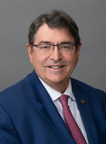
John D. Johnson
Republican · Senate District 3
Hear from them directly
Contact Sen. John D. Johnson
- Email: jjohnson@le.utah.gov
- Phone: 385-272-7428
- Office: #297 2637 N Washington Blvd, North Ogden, UT, 84414
Constituents get priority, so say you live in their district. Writing about a specific bill? Open it and use Take action for a ready-to-send message.
Watch or join a meeting
Every committee hearing and floor session is open to the public and streamed live on le.utah.gov. Each committee's agenda has the link to watch or join online, and how to sign up for public comment.
John D. Johnson serves on:
- Higher Education Appropriations Subcommittee
- Public Education Appropriations Subcommittee
- Education Interim Committee
- Law Enforcement and Criminal Justice Interim Committee
- General Oversight Committee
- Child Welfare Legislative Oversight Panel
- Senate Education Confirmation Committee
- Senate Economic Development and Workforce Services Confirmation Committee
- Senate Education Committee
- Senate Economic Development and Workforce Services Committee
What they've said
181 remarks on 48 billsS.B. 295 Intellectual Diversity in Education and Government · Senate floor debate (day 45) · Mar 6, 2026
Explains that an amendment about clubs in grade schools was removed and that a provision requiring universities to record campus debates was taken out, and says he thinks the bill is better now.
▶ Watch at 10:31Read what they said
Yes. There we, we changed some, some things with respect to clubs. There was one amendment that they made and I asked them to take it off and so they reconsidered the, the vote and then, and then voted on it again. So that amendment was no longer in there, had to do with clubs in, in grade schools, which I didn't really like that Well, but so, but that one's taken out of it. Uh, the universities did ask us to, to modify some of the provisions on, uh, having debates on campus. And, uh, there was a provision in there that said they had to record it. We took that out and, uh, so I, I, I think …
S.B. 34 Public Education Revisions · Senate floor debate (day 45) · Mar 6, 2026
Says a drafting error in how the Apex Center was renamed and expanded needs to be cleaned up in the bill.
▶ Watch at 19:37Read what they said
Yeah. One, one of the biggest problems is there, there was a drafting error and the way they renamed the Apex Center and the expansion of that. So, uh, that I, it, it really needs to be cleaned up.
H.B. 194 Utah State Board of Education Ethics Amendments · Senate floor debate (day 45) · Mar 6, 2026
Presents H.B. 194, which creates an ethics code, conflict of interest disclosures, a complaint process, and an independent ethics commission for the Utah State Board of Education.
▶ Watch at 43:57Read what they said
Thank you Mr. President. Uh, colleagues HP 1 94 establishes a clear and transparent ethics framework for members of the Utah State Board of Education. The state board holds constitutional authority over the general supervision of public education in Utah. With that authority comes a responsibility to maintain public trust, yet unlike many other public bodies in our state, there is currently no comprehensive statutory process for handling ethics complaints against board members. This bill fills that gap. HP 1 94 creates a code of official conduct, requires conflict of interest disclosures, and establishes a structured complaint process that includes investigation, evidentiary hearings, and due process protections. It also creates an independent ethics commission composed of former judges, former board …
H.B. 426 Online Education Service Provider Amendments · Senate floor debate (day 45) · Mar 6, 2026
Presents H.B. 426, saying it adds guardrails for online education programs run by local education agencies, including licensed teachers of record, documented pacing and proctored assessments, student-to-teacher ratios, and state board waivers for early mastery.
▶ Watch at 2:02:11Read what they said
as learning models evolve. More schools are offering competency based and self-paced programs where students demonstrate mastery rather than simply logging seat. Time done well. These pro programs are powerful, allowing advanced students to move faster, struggling students to get targeted support and families to access flexible environments. But flexibility must come with accountability. The bill clarifies that when a local education agency operates one of these programs, the district remains responsible for student progress. It establishes four common sense guardrails, a licensed teacher of record for every student documented pacing and proctored assessments, reasonable student to teacher ratios and preserve proficiency flexibility through state board waivers for early mastery. This bill does not pro, pro prohibit online learning or …
H.B. 357 Amendments to Motor Vehicle Data Privacy · Senate floor debate (day 45) · Mar 6, 2026
Opposes the bill, saying vehicle data is spread across many systems so a single dashboard deletion is impractical, and that the bill would write vehicle software design into statute.
▶ Watch at 2:19:07Read what they said
I rise in opposition to HB 3 57. Let me begin with a reminder of how dramatically cars have changed. Many of us remember vehicles from before the OBT two diagnostic systems existed. If the car made a strange noise, you open the hood, listen carefully. And if you were lucky, someone nearby had a wrench and a theory. Modern vehicles are not like that anymore. Today's cars are essentially distributed computer networks on wheels. They contain dozens of processors, sensors, safety systems and communication platforms constantly exchanging data in order to operate safely. Those systems monitor braking, engine performance, collision avoidance, software updates, navigation, and reliable diagnostics. Now here is where the bill runs into trouble. The bill requires …
H.B. 260 Unauthorized Practice of Law Amendments · Senate floor debate (day 45) · Mar 6, 2026
Says the bill appears to be turf protection and notes that the practice of law is already regulated by the Utah Supreme Court.
▶ Watch at 2:32:00Read what they said
Okay. So it's, it's, this sounds a little bit like turf protection. I just want, I I just wonder about that. So by definition, the practice of law is governed by, in our constitution, by the Utah Supreme Court. And so it is already illegal to practice law without a license that is already illegal. And so there is a protected turf already. This bill does not change the protected turf. What it does is it says when people violate that, when they step onto that protected turf, these are the options that are available. And so to the extent you, if you wanna characterize it as as turf protection, I think that's fine. But our ability to, uh, you …
H.B. 260 Unauthorized Practice of Law Amendments · Senate floor debate (day 45) · Mar 6, 2026
Asks the sponsor how AI will affect the legal profession and whether the bill adds another barrier.
▶ Watch at 2:33:38Read what they said
Senator Johnson? Yeah, I have, I have another question. Uh, you know, we just voted on a bill to, uh, do a study for new law school, and it seems like to me, uh, the AI systems are getting pretty good at this stuff. And I'm, I'm just curious as to, uh, the sponsor's, uh, opinion about what, what's, what this is going to do to the profession and does this just offer another barrier?
H.B. 260 Unauthorized Practice of Law Amendments · Senate floor debate (day 45) · Mar 6, 2026
Asks why the bill adds a private right of action given existing regulation and enforcement.
▶ Watch at 2:38:23Read what they said
So right now we already regulate the unauthorized practice of law through the Supreme Court, Utah State Bar enforcement, existing criminal statutes, civil remedies, and this particular law adds a private right of action by a client. Uh, and I I'm just curious as to why, why we now need a private right of action.
H.B. 260 Unauthorized Practice of Law Amendments · Senate floor debate (day 45) · Mar 6, 2026
Raises a separation-of-powers concern about the legislature criminalizing conduct defined by the judiciary.
▶ Watch at 2:40:28Read what they said
Senator Johnson. I I I, I'm also curious about another thing too. It seems like there's an ambiguity of the separation of powers here. So the legislature is criminalizing conduct defined by the judiciary
H.B. 408 Data Sharing Amendments · Senate floor debate (day 44) · Mar 5, 2026
Asks what data standard will be used for the data transfers and compares the bill to requiring Ford and Chevy to share a key.
▶ Watch at 13:21Read what they said
So can you tell me the data standard that you're gonna use to transfer this data? Very vague. In the bill, It's the, It basically says they can use any data standard. They want to be able to transfer this data. This, this bill. Basically, I, I mean, it's like telling Ford Okay. That they need to create a key that I can use in my Chevy that transfers all my data and settings into my Chevy so that I can switch easily between my Ford and my Chevy Set. Yeah. So I, I'm just curious as to how, how they're gonna accomplish this. Senator Mikel, will you yield?
H.B. 408 Data Sharing Amendments · Senate floor debate (day 44) · Mar 5, 2026
Asks whether a user could move all their posts and connections to another platform, comparing this to a car key transferring settings.
▶ Watch at 14:53Read what they said
Yeah. So you're, you're saying, oh, oh, sorry. Go ahead, Senator Johnson. You're, you're basically saying then that if I decide one day I want to be on True social instead of Facebook, I, I need to just push a button and all of a sudden all of my posts that I've ever made, okay. My friends and everything are gonna transfer over to, uh, this other over to truth social so I can leave Facebook. So you're, you're basically telling them, so in my mind, that's kinda like telling Ford their key needs to work in the Chevy and it needs to transfer all of my personal preferences over there.
H.B. 408 Data Sharing Amendments · Senate floor debate (day 44) · Mar 5, 2026
Says users agreed to platform terms allowing data use and that the bill imposes standards that are impossible to meet, citing his experience with data standards.
▶ Watch at 16:07Read what they said
Yeah. Yeah. I would like to follow up because you, you know, basically you agreed to a user agreement when you signed onto Facebook that allowed them to use that data. And, and they basically said that if you wanna leave, we'll give you your data back, we'll let you erase it off our platform. But now you're telling them how to run their business. You're telling them that they need to provide you an opportunity to be able to transfer that directly to their competitor. I, I just don't see, we, we have all of these policies that just don't even make sense. I don't even know how they can accomplish that. You know, I, I wrote, uh, the …
H.B. 408 Data Sharing Amendments · Senate floor debate (day 44) · Mar 5, 2026
Says he would like to move a substitute.
▶ Watch at 17:35Read what they said
Senator Johnson? Well, I'd Like to move that sub at some point, but I'll Come back. Well, if you want to,
H.B. 408 Data Sharing Amendments · Senate floor debate (day 44) · Mar 5, 2026
Moves to delete the title and body of the bill and replace it with substitute two.
▶ Watch at 17:45Read what they said
Yes. I would like to delete title and body Of, uh, SB 4 0 8, substitute two and replace it, I think. Yeah. Substitute one.
H.B. 408 Data Sharing Amendments · Senate floor debate (day 44) · Mar 5, 2026
Says vendors and companies have talked with him and do not know how to meet last year's standards, and he sees nothing in the bill that makes compliance easier.
▶ Watch at 21:46Read what they said
Thank you. So, So I have talked to a number of the vendors, uh, number of the companies, they basically set up a, a standard that the companies don't even know how to meet. And so I, I don't know how I, I don't know how they can actually accomplish what was asked in the, in the bill last year. I was told in committee, I, I asked many questions about this in our committee and I, and you know, then I got some incoherent, i, I mean, responses back in terms of, oh yeah, well this is just gonna fix what we did wrong last year and I can't see a thing in single thing in this bill that …
H.B. 408 Data Sharing Amendments · Senate floor debate (day 44) · Mar 5, 2026
Says the substitute would repeal the whole act that started last year.
▶ Watch at 24:23Read what they said
Sorry. Substitute Senator Johnson. It would repeal the, the whole act that started last year.
S.B. 319 Health Insurance Preauthorization Amendments · Senate floor debate (day 44) · Mar 5, 2026
Says the insurance companies requested a few date changes, which he negotiated after the presentation, and that he made the related amendment in the House committee.
▶ Watch at 32:57Read what they said
Yeah. There, there were a few, uh, date changes that the insurance companies wanted. Uh, I negotiated those right after the, the presentation here and then I, I made tho that amendment in the house Committee.
H.B. 508 State Facilities Modifications · Senate floor debate (day 44) · Mar 5, 2026
Johnson asked why a $10 million savings figure is not in the fiscal note.
▶ Watch at 48:33Read what they said
Uh, will the sponsor yield? Yes. He has yielded, yes. Okay. I, I read in this bill that, that, uh, we're going to save $10 million. Is that right? Senator Ipson? Yes. So I I I'm kind of curious. I I Why isn't that, uh, in the fiscal note?
H.B. 508 State Facilities Modifications · Senate floor debate (day 44) · Mar 5, 2026
Johnson asked whether the fiscal analyst made a mistake.
▶ Watch at 49:25Read what they said
So are you saying that the fiscal analyst made a mistake? Check The status of it.
H.B. 508 State Facilities Modifications · Senate floor debate (day 44) · Mar 5, 2026
Johnson said the savings are not included in the fiscal note and referred to the third paragraph of the note.
▶ Watch at 49:57Read what they said
I must be missing that in the fiscal note. It's not included in the fiscal note, but the fiscal note by the fiscal analyst was marked unknown with the, that's why it's marked in yellow on the board. Third Paragraph. Thank you.
H.B. 438 Artificial Intelligence Amendments · Senate floor debate (day 44) · Mar 5, 2026
Opposes the bill, saying the substitute improves it but the definition remains unclear, the law would take effect before the study, and clear statutory guardrails are needed.
▶ Watch at 1:50:18Read what they said
Yes, Mr. President, I, I rise in opposition to HP 4 38. Uh, let me begin by acknowledging the sponsor's work. The substitute improves the bill. The definition was narrowed. Enterprise uses were excluded and the earlier rulemaking authority was reduced to a study. I appreciate these efforts, but the central problem remains. The bill still does not clearly define what it regulates. Let me also be clear about something else. I support guardrails around artificial intelligence. In fact, I spent more than 40 hours this session working with educators, technologists, and policy makers writing an AI sandbox framework so that Utah schools could safely explore these tools. The principle was simple, define clear guardrails and allow responsible innovation. That …
S.B. 312 Educator License Amendments · Senate floor debate (day 44) · Mar 5, 2026
Explains that the committee clarified some language about the responsibilities of the board.
▶ Watch at 2:39:09Read what they said
It? It just in committee we clarified some of the language about what the responsibility of the board was.
S.B. 319 Health Insurance Preauthorization Amendments · House Health and Human Services Committee · Mar 4, 2026
Presents SB 319, describing its provisions on prior authorization transparency, AI disclosure, decision timelines, human review of clinical denials, 12-month continuity of care, and public reporting, and outlines the changes in the first substitute.
▶ Watch at 54:22Read what they said
I apologize. Committee, I, I had two other presentations over in the education committee. I I appreciate your, uh, your consideration. Uh, chair members of the committee thank you for the opportunity to present SB three 19. I want to begin with a story a physician told me, and I actually wrote an op-ed about this in the paper. Uh, he had a patient diagnosed with pancreatic cancer. He determined the appropriate chemotherapy and prescribed a standard anti anti-nausea medication so she could tolerate the aggressive treatment ahead. It was not experimental, it was not unusual. It was the right medical call, but it did not start right away. And, uh, he actually came, came to me and talked to …
S.B. 319 Health Insurance Preauthorization Amendments · House Health and Human Services Committee · Mar 4, 2026
Says he hopes the committee will adopt the substitute, noting he has talked with insurance companies that requested changes.
▶ Watch at 1:01:11Read what they said
So I'm hoping we can adopt that, that, that a a actually had talked to a number of the insurance companies that wanted, wanted some changes. Uh, so, okay.
S.B. 322 Educational Technology Regulatory Sandbox · House Education Committee · Mar 4, 2026
Presents SB 322 to create an educational technology regulatory sandbox that would pilot AI tools in public schools under guardrails, with opt-in participation, human review, parental notice, vendor red teaming, and a five-year sunset.
▶ Watch at 1:11:01Read what they said
Bill. I would love to. I would love to thank you. SB 3 22. I have sat, you know, in, in your chair over in the Senate and to a lot of bills that came through this year, uh, about ai, about software in the classroom. And I, I understand the intent behind all of them. I, I think it's really important that we protect children. This is back to, to that same theme, but I, I also think is, is it is a mistake if we throw out the baby with the bath water. Uh, I think there are legitimate concerns about ai. I I think these concerns are important, but I think what we need is guardrails, not …
S.B. 319 Health Insurance Preauthorization Amendments · House Health and Human Services Committee · Mar 4, 2026
Says a denial cannot occur without a human reviewer, that the bill does not change the appeals process, and that AI-specific rules may be addressed later.
▶ Watch at 1:13:01Read what they said
So, so that is always the human in the loop before a denial can happen. Okay. So the human has to be able to, to talk to it and, and you know, the thought is kinda like, if, if they want to prove something and they want to use AI to do that, I, I think that's great, right? The faster that can happen, you know, having, having that feedback, and that's what I'd really like to define better in a, in an AI specific bill. And, uh, you know, that that's part of what we were talking about with, uh, blue Cross in terms of, you know, getting those other guidelines in there. If you look at, if you …
S.B. 322 Educational Technology Regulatory Sandbox · House Education Committee · Mar 4, 2026
Explains that a sandbox sets aside certain regulatory requirements for innovation while keeping safety guardrails and requiring schools to show that tools benefit students.
▶ Watch at 1:19:43Read what they said
So what the sandbox, the, the idea behind a sandbox is it says, look, we want innovation. And so we're gonna block off and we're gonna take out the regulatory re regime, but we wanna retain these guardrails. Okay? And so you, you know, they can do innovative things. They don't have to follow the same pedagogy standards that we've had in the past, right? But they have to prove that what they're doing actually is gonna make students better off. But the sandbox has actually created so that we can have innovation.
S.B. 322 Educational Technology Regulatory Sandbox · House Education Committee · Mar 4, 2026
Says the minimum standards are safety guardrails and that teachers should stay in the loop rather than banning AI outright.
▶ Watch at 1:20:28Read what they said
Artificial intelligence? Well, the standards would be the standards on safety. Okay. That's the guardrails that I'm talking about, right? And, and those are actually list listed specifically. These are the things that every, every one of the bills I've seen this es this, this session has said, look, here's, here are the problems with ai. But the conclusion often is, let's just block it off and not allow any of it. And I think that's a mistake because AI's here, AI is gonna be an important part of education going forward, but we have to make sure that we keep teachers in the loop that we, that we put up guardrails so students aren't harmed.
S.B. 322 Educational Technology Regulatory Sandbox · House Education Committee · Mar 4, 2026
Confirms the bill requires opt-in consent, says some reading software is helpful, and says the pilot should be evaluated on data showing better student results.
▶ Watch at 1:21:34Read what they said
Yes, that's true. To do this. Okay. Because there is I think, some misunderstanding between what this would do and what their kids would then be doing. Yeah. And, and what I would hate to do, I, I think there's a lot of good, uh, we, we've seen, uh, reading software that's really been handy in helping students learn to read. Uh, there's a lot of good software out there, and I, I think, you know, we have to move away from this idea that the sky's falling and it, you know, everybody's gonna die because, you know, some AI bot's gonna take over the world and it's here. Right? So responsibly, we need to put up guardrails for it. …
S.B. 322 Educational Technology Regulatory Sandbox · House Education Committee · Mar 4, 2026
Argues Utah should adopt guardrails rather than ban AI in schools, draws on his own technology background, and asks for support.
▶ Watch at 1:23:52Read what they said
Like I said, I think Utah has consistently led the nation in technology policy that balances innovation with protection. And, and I think we, we would make a, a serious mistake if we simply ban this technology, I, or, or completely remove technology from the classrooms. We need to be responsible about it. We need to have guardrails. And, and I think, uh, I think this, you know, I I actually sat down and wrote this bill because I, you know, I, I don't know if you guys know, but I, I've, I actually built my career around AI and technology and, uh, did, did quite well with that. Uh, I, I did a lot of early research on neural …
S.B. 153 Election Amendments · Senate floor debate (day 43) · Mar 4, 2026
Explains the concurrence changes: protecting information for families of domestic violence victims and for military members, and limiting online petition-signer information to voter ID, signing date, and party.
▶ Watch at 18:40Read what they said
Yes. There I, there there were just some things we overlooked. Uh, for instance, uh, victims of domestic violence, uh, their families would also be able to be hidden. Uh, and military members, uh, they, they would still be able to have, uh, private voter records even though they aren't deployed, if they were deployed. So, and, uh, one further thing. In order to protect a little bit more privacy, uh, signers of petitions, uh, you would only have, uh, the voter ID the date they signed and the party they were part of that. And that would be all that would be done online and then they could look up the other things. So that, that's the changes.
S.B. 241 Early Literacy · Senate floor debate (day 43) · Mar 4, 2026
Asks under suspension of the rules to reconsider the Senate's prior action on SB 153.
▶ Watch at 22:57Read what they said
Under suspension of the rules, I I would like to reconsider our actions on SB 1 53. Substitute three.
S.B. 241 Early Literacy · Senate floor debate (day 43) · Mar 4, 2026
Moves to reconsider the Senate's prior actions on SB 153, substitute four.
▶ Watch at 23:58Read what they said
Okay, I, I move that we reconsider our actions on Senate bill 1 53 Substitute four.
S.B. 153 Election Amendments · Senate floor debate (day 43) · Mar 4, 2026
Explains the request for a call of the Senate and that the bill needs an immediate effective date to pass. · speaker not certain
▶ Watch at 25:08Read what they said
We have a call the Senate five or more standing and this bill needs an immediate action date if it's gonna pass.
H.B. 249 Federal Funds Modifications · Senate floor debate (day 43) · Mar 4, 2026
Presents H.B. 249, which directs the USU Huntsman School's Analytic Solutions center to build public dashboards on federal funding dependence and contingency scenarios, and routes the federal funds portion of the budget stress test to the Federalism Commission.
▶ Watch at 48:59Read what they said
Mr. President, I, I'm proud to carry House Bill 2 49 in the Senate and I want to commend Representative Roberts for his work on this legislation. Utah receives a significant portion of its budget from federal funds, yet we lack a clear real time picture of what happens if those funds are reduced or restructured. This bill directs the Analytic Solutions center at the USU Huntsman School of Business to build publicly available dashboards that visualize our federal dependency and critically models future contingency scenarios. So, so we're stress testing our budgets, not just taking a snapshot. The bill also routes the federal funds portion of our budget stress test directly to the Federalism Commission, which then makes recommendations …
H.B. 249 Federal Funds Modifications · Senate floor debate (day 43) · Mar 4, 2026
Moves under suspension of the rules that the first substitute of H.B. 249 pass.
▶ Watch at 50:28Read what they said
I move under suspension of the rules. That first, uh, substitute house bill 2 49 Pass. Thank you. Senator
H.B. 241 Charter School Amendments · Senate floor debate (day 43) · Mar 4, 2026
Worries the bill could discourage school districts from closing schools because of charter school competition.
▶ Watch at 2:05:34Read what they said
Okay. I I'm just, I'm just kind of curious if this would set up a, uh, preserver, perverse incentive for, uh, school districts to not close schools because of the competition that might come from those charter schools. I, that, that worries me a little bit.
H.B. 241 Charter School Amendments · Senate floor debate (day 43) · Mar 4, 2026
Suggests a charter school would likely pay the most for a closed building, so markets could handle such sales without government involvement.
▶ Watch at 2:07:06Read what they said
The the other thing I was curious about too is it seems like to me, if it's a closed public school, that a charter school would probably have that, that might be the highest and best use, which means they'd probably be willing to pay the most for it. It seems like markets could clear these things out without some imposition by, by the government.
H.C.R. 14 Concurrent Resolution Supporting the Transfer of Federally Managed Lands · Senate Economic Development and Workforce Services Committee · Mar 3, 2026
Referred to a previous federal effort and asked how the land would be selected and what mechanism would be used.
▶ Watch at 33:58Read what they said
I, you know, I I I defended online, uh, I know Mike Lee tried to get this put in the big beautiful bill. Yep. And it kind of blew up mm-hmm. Out of control, right? Yep. And he was talking about parcels, you know, within city limits. Yes. We, we have some all over the state Yes. That are like that, right? Yep. Yes. Um, one, one of the, one of the things I, I worry a little bit about though, this, this resolution isn't very specific right? In terms of who, who would get that land and decide how it was used. It, it does say it's used for moderate housing. Right? But, but how would that, how, what …
H.C.R. 14 Concurrent Resolution Supporting the Transfer of Federally Managed Lands · Senate Economic Development and Workforce Services Committee · Mar 3, 2026
Moved that HCR 14 pass out of committee with a favorable recommendation.
▶ Watch at 36:18Read what they said
I, I move that we pass out. I gotta find the bill. HCR 14, HCR 14 with favorable recommendation.
H.B. 408 Data Sharing Amendments · Senate Economic Development and Workforce Services Committee · Mar 3, 2026
Said the bill dictates core software architecture and questioned requiring real-time data sharing between platforms.
▶ Watch at 40:52Read what they said
So, so I don't see this as a neutral regulation. It dictates core software architectures on these platforms. These platforms are given, given you the use of their platform by sharing your data. And I, I don't have any problem. I, I mean, you, you're gonna have to convince me that I, I don't have any problem with the idea of being able to remove your data if you put it on there, right? And go back to, to being private again. Uh, you know, being able to delete what you have, being able to download it is one thing. But to say that there's a realtime, continuous, realtime data sharing open protocols, I mean, what I, I wonder how …
H.B. 408 Data Sharing Amendments · Senate Economic Development and Workforce Services Committee · Mar 3, 2026
Said interoperability belongs at the federal level, raised security concerns, and said he could not support the bill.
▶ Watch at 46:34Read what they said
Johnson. Yeah. If I may, uh, you know, one, I I, I could see an interoperability thing being done at the federal government, but I, I think this is a very different thing. These are independent companies and, and, you know, I, I'll, I'll, I'll grant you the, the cell phone idea is one, right? But, uh, but I, I just, I, I just can't comprehend how we want to enforce this micro level thing at a state level, state by state. And, and, uh, boy, I tell you, if I was a social media company, I really wouldn't like this. And that's, that may be your intent, right? But, uh, i, I just, I dunno, mandates open protocols, it …
H.B. 44 School Security Personnel Standards · Senate Economic Development and Workforce Services Committee · Mar 3, 2026
Moved to adopt House Amendment 3 and had trouble locating it on the screen.
▶ Watch at 1:00:17Read what they said
I, I move, uh, amendment three. Hold on just a second House. Amendment three. Thank You. I am not seeing the house amendment Seeing It. Okay, I'm, I've got it. I've got it. Yep, I got it now. So, thank
H.B. 44 School Security Personnel Standards · Senate Economic Development and Workforce Services Committee · Mar 3, 2026
Moved to pass the substitute HB 44 out favorably as amended.
▶ Watch at 1:01:34Read what they said
I, I move that we pass out, uh, six, substitute HB 44 with a favorable recommendation as amended. Thank you. With amendment two and three.
H.B. 44 School Security Personnel Standards · Senate Economic Development and Workforce Services Committee · Mar 3, 2026
Thanked the sponsor for his work on the bill and said student safety is important.
▶ Watch at 1:03:55Read what they said
I, I just want to thank, uh, Representative Wilcox. I know he's worked really hard on all of these bills and I understand, you know, there's a lot of consternation, there's a lot of money involved with this, but I think the safety of our kids is really important. And so I appreciate the sponsor for his work on this.
H.B. 511 Procurement Amendments · Senate Economic Development and Workforce Services Committee · Mar 3, 2026
Raises concerns about competitive neutrality, taxpayer value, and cost, and asks how Utah supplier status is defined.
▶ Watch at 1:25:41Read what they said
So I, I worry about, uh, competitive neutrality. I, I think we have to worry about taxpayers, right? What's the value to taxpayers, payer payers? What's the transparency? So this bill explicitly requires, uh, one that you should use resident suppliers if possible, right? Uh, giving re resident suppliers greater opportunity to compete. I that, that's not too bad awarding additional evaluation points. It's, this is not neutral encouragement though. It's, it's a structured favoritism. And I, I think that these type of protectionist policies tend to reduce efficiency. They reduce, uh, com competition. They could increase long-term cost. Uh, artificial advantage sometimes reduces pressure to innovate. And, uh, so so you're saying they have to be a Utah based …
H.B. 511 Procurement Amendments · Senate Economic Development and Workforce Services Committee · Mar 3, 2026
Asks whether the bill could lead to other local or group-based procurement preferences.
▶ Watch at 1:29:04Read what they said
So does this mean like tomorrow we might have a rural supplier preference or veteran owned preference or minority owned preference or in county preference? I, I, I just don't understand.
H.B. 511 Procurement Amendments · Senate Economic Development and Workforce Services Committee · Mar 3, 2026
Opposes the bill's preference for in-state companies and says he cannot support it, and moves to proceed to the next agenda item.
▶ Watch at 1:31:23Read what they said
Well, I, I, I hate to move the agenda, but I, I just, I, you know, Utah's procurement system has long been built on a simple principle fair competition and best value for taxpayers. And I, I just, I, I, I hate going down the road of giving preference to one group over another. And, uh, you know, if, if, you know, fair competition, best value for taxpayers, I, I don't think we should penalize people 'cause they're in state company, in state companies may be able to have an advantage on delivery times. Other things, you know, if they hold inventory. So, you know, to give them a 10% scoring advantage, though, I, I think, you know, does that …
S.B. 295 Intellectual Diversity in Education and Government · House Economic Development and Workforce Services Committee · Mar 3, 2026
Presented S.B. 295, which he says clarifies H.B. 261 on institutional neutrality, adds required public policy events, and sets review and club standards.
▶ Watch at 1:49:00Read what they said
Thank you very much. It's nice to be in this committee. I don't think I've, uh, had the pleasure so far. So I I appreciate being here, chair and members of the committee. S sp 2 95 strengthens Utah's institutional Neutrality framework and corrects two predictable failures that surfaced after HB 2 61. So, HP 2 61 established an important constitutional boundary. Public institutions may not compel ideological affirmation and may not treat individuals differently based on identity. SB 2 95 ensures that that boundary is applied correctly. And so I've got a substitute online too that you can, uh, but I'm going to be speaking to that substitute if it's okay. Thank you. So, I, I did not, uh, …
S.B. 295 Intellectual Diversity in Education and Government · House Economic Development and Workforce Services Committee · Mar 3, 2026
Said the initial bill may have made things worse, and that this bill corrects an overcorrection.
▶ Watch at 1:56:34Read what they said
Yeah, I, I, I think the initial bill actually did make things worse. I, but I, but I actually think after I, after I wrote, uh, the op-ed with, with Representative Hall, and I think people started to realize that the bill really wasn't what they thought it was. And I think there was a really hard look to begin with. And I think there was overcorrection and I, I think this is necessary to fix that overcorrection.
S.B. 295 Intellectual Diversity in Education and Government · House Economic Development and Workforce Services Committee · Mar 3, 2026
Said the bill clarifies that professors cannot compel belief, gave an economics-teaching example, and described the earlier context of diversity and civil rights rules.
▶ Watch at 1:57:15Read what they said
Well, I think that's, I I think that's what this is actually an attempt at to clarify that, that professors are not compelled in their speech. They can, they can talk about issues that they, that, that they have, but they can't compel students to, uh, believe those issues. It's fine. You, you know, there's different approaches to economics. For instance, you know, you might have somebody, I, I, I bring that up because, uh, long ago I taught economics, right? And I, you know, I taught Keynesian theory. I taught, uh, Adam Smith. I taught Carl Marx. And I, I think it's necessary for students to learn those different viewpoints where I would've crossed the line if I'd have …
S.B. 295 Intellectual Diversity in Education and Government · House Economic Development and Workforce Services Committee · Mar 3, 2026
Said non-curricular clubs may be organized around ideologies or identities, but all clubs must be open to all students.
▶ Watch at 2:00:04Read what they said
Those would be considered non-curricular clubs under this identification. Right. But if they're curricular clubs, so if they're required, uh, for students in classes, then, then there have to, there they have to be open to all the students. And actually all the clubs have to be open to all the students. It doesn't mean they can't call them, you know, the Muslim club or, uh, you know, any other particular group.
S.B. 295 Intellectual Diversity in Education and Government · House Economic Development and Workforce Services Committee · Mar 3, 2026
Explained the second substitute, which adds flexibility for debates, removes video recordings, and adopts club language worked out with Rep. Hall.
▶ Watch at 2:03:17Read what they said
Subbed? No, there is a substitute online second substitute that, that clarifies the wording in the, uh, you know, in the presentations. Uh, uh, the universities actually came to me and said that the, the way it was structured wouldn't work very well. And they wanted some more flexibility in, in the way those debates would be structured to fit within their regular schedule, to take out the video recordings because of copyright infringements. And, you know, uh, they, they didn't want that to be become something that people just critiqued, which I, which I thought was, was reasonable. Then there was also some questions about, uh, you know, the, the, the, we adopted a lot of the stuff that …
S.B. 295 Intellectual Diversity in Education and Government · House Economic Development and Workforce Services Committee · Mar 3, 2026
Responded with a brief remark about a missionary in Tahiti. · speaker not certain
▶ Watch at 2:05:47Read what they said
Okay. But also a missionary in Tahiti, so I love that. Oh, well, that's very cool.
S.B. 312 Educator License Amendments · Senate floor debate (day 42) · Mar 3, 2026
Presents S.B. 312 as setting due process standards and proportionality for educator license actions, with written findings for non-automatic restrictions.
▶ Watch at 1:19:54Read what they said
process before adverse license action. The educator must have the opportunity for a PAC hearing. The board's decision must be grounded in evidence. Written findings are required when imposing non-automatic restrictions. The educator receives a copy of those findings. Existing appeal rights remain intact. Restrictions are tied to license status, not to mere allegations. This bill matters because it protects students in cases of serious misconduct, but it prevents disproportionate punishment for technical errors. It creates clear statewide standards instead of inconsistent, uh, district practices, it aligns educator discipline with the structure used in other licensed professions while pursu preserving procedural, uh, fairness. SB three 12 is not an expansion of discipline as a clarification of consequences for serious misconduct …
S.B. 312 Educator License Amendments · Senate floor debate (day 42) · Mar 3, 2026
Responds that school districts and school boards do not want the bill, expects it to add confusion, and suggests sending it to interim study to await the PAC audit.
▶ Watch at 1:22:06Read what they said
Thank you. You know, I, I feel like this is, um, a problematic, our school boards are don't really want this bill. Our school districts don't want this bill. I think this is, is gonna make it more chaotic instead of more clarified. I said this last yesterday. We are trying to do an audit with PAC and, uh, I think we should send this to interim and see what the audit says because I think this would bring more chaos instead of more clarity. Thank you.
S.B. 319 Health Insurance Preauthorization Amendments · Senate floor debate (day 42) · Mar 3, 2026
Presents S.B. 319, which would add prior authorization requirements including posted rules, AI disclosure, review time limits, licensed review of clinical denials, and public reporting.
▶ Watch at 1:43:01Read what they said
transparency, accountability, and timeliness to prior authorization. Prior authorization was created to prevent misuse and control costs That purpose remains legitimate. Oversight matters, but over time, the process has expanded far beyond rare or experimental treatments. Today. It affects routine medications, imaging, and outpatient care, often with unclear criteria and unpredictable timeliness. When a patient is facing cancer, heart disease, or serious chronic conditions, waiting on paperwork is not a minor inconvenience. It creates stress, uncertainty, and in some cases, avoidable complications. The bill does not eliminate prior authorizations. It disciplines it. First, insurers must clearly post their authorization requirements in plain language. Patients and providers should not have to guess what rules apply. Second, if artificial intelligence is used …
S.B. 322 Educational Technology Regulatory Sandbox · Senate floor debate (day 42) · Mar 3, 2026
Presents S.B. 322 as a voluntary, time-limited testing framework for educational AI tools in classrooms, with safeguards for safety testing, parental notice, student rights, historical accuracy, and legislative approval before any statewide use.
▶ Watch at 2:26:37Read what they said
Not someday, not in theory right now. Teachers are using it, students are using it. Vendors are marketing it aggressively to every school district in the state and across the country. And Utah has no systematic framework for evaluating whether any of it works, whether any of it is safe or whether any of it respects our students' privacy and our parents' rights. That is what this bill addresses. Some of my colleagues believe we should prohibit AI in our schools entirely. I understand that instinct, but Prohi prohibition does not pro protect students. It simply pushes the technology underground into personal devices with no oversight at all. Others believe we should let districts move forward on their own without …
S.B. 322 Educational Technology Regulatory Sandbox · Senate Education Committee · Mar 2, 2026
Asked that the first substitute be moved and moved to adopt it.
▶ Watch at 1:11:26Read what they said
Oh, first and this substitute need to be moved. Yes. If we could do That all to entertain a motion. I'll move that. Okay.
S.B. 322 Educational Technology Regulatory Sandbox · Senate Education Committee · Mar 2, 2026
Presented SB 322 as a time-limited, voluntary regulatory sandbox for AI and education technology with red teaming, parental notice, educator oversight, student protections, independent evaluation, and legislative approval required before statewide adoption, then opened the floor for questions.
▶ Watch at 1:11:53Read what they said
I, I started writing this bill when I saw a lot of the, uh, AI bills that were coming forward this time, and a lot of the software bills. And so the new, uh, the new title actually is Education Technology Regulatory Sandbox. Because I, I, I actually think that we need to codify and, uh, explain some of the rules. I I heard from a lot of people, this is you. You know, I, I think we're trying to go from one extreme to the other, where we have software in school, we have, uh, machines in school, and then we move to the other extreme where we want to get rid of everything. And I, I think there's …
S.B. 322 Educational Technology Regulatory Sandbox · Senate Education Committee · Mar 2, 2026
Agreed the point is valid, said the language could be refined, and noted that parents can opt out while teachers keep final grading authority.
▶ Watch at 1:24:21Read what they said
I I think you're raising a very valid point. Thank you. I, I think that's, I think that's an important consideration and, uh, we could work on that language a little bit because it, you know, parents do have the right to opt out of these things, but, you know, that doesn't mean they get to take the class if they opt out of it. Right. They may have some other class that they could take instead. And so I, you know, I think as this goes on, I, I think people are gonna get a lot more, uh, used to it. And I think that you, you, you know, one of the things that that is pointed out here …
S.B. 322 Educational Technology Regulatory Sandbox · Senate Education Committee · Mar 2, 2026
Said the bill sets guardrails while allowing pilot programs and data-driven evaluation rather than a ban on AI tools in schools.
▶ Watch at 1:26:00Read what they said
Yeah. I, I, Senator Riebe, I, I, I sat here and listened through every one of these presentations. And I, that's, that's why I started writing this, because I thought, you know, we do need guardrails, but, but you know, some of the first AI bills I saw said, let's, let's just ban it, right? Let's ban chatbots. Let's not allow students access to them. And, and the reality of it is, it's here, right? And, and you know, what we need to do is give it a chance. Let let people look at the data. Let's let, let's let schools adopt it. Let's let them move forward with pilot programs, and then let's evaluate them. Let's use a data-driven …
S.B. 322 Educational Technology Regulatory Sandbox · Senate Education Committee · Mar 2, 2026
Began remarks on Utah's record of leading the nation in technology policy.
▶ Watch at 1:29:08Read what they said
And would you like to some, Yeah, I would say, uh, Utah's consistently led the nation technology policy.
S.B. 322 Educational Technology Regulatory Sandbox · Senate Education Committee · Mar 2, 2026
Closed by arguing that the bill builds an evidence base, positions Utah to lead on AI policy, and provides technical assistance to Utah ed tech companies, and asked for committee support.
▶ Watch at 1:29:35Read what they said
You. I, you know, I, I guess the last thing I'd say, why this, why now, uh, Utah has consistently led the nation in technology policy that balances innovation and protection. We created the first state office of artificial intelligence policy. We have established the strongest student data privacy framework in that, in the region. We have demonstrated repeatedly that we can write AI policy that respects both the promise of new technology and the constitutional liberties of the people. It affects this bill. The, the bill also provides technical assistance to Utah based ed tech companies, helping local innovators meet high safety standards and complete compete nationally keeping economic benefits. Here in Utah, SB 3 22 is the next …
S.B. 327 Occupational Licensing Amendments · Senate Economic Development and Workforce Services Committee · Mar 2, 2026
Presented SB 327, which would repeal state licensing requirements for commercial interior designers, court reporters, deception detection practitioners, and music therapists, and argued that public safety risks in these fields do not justify licensing.
▶ Watch at 22:40Read what they said
Thank you, Madam Chair. You are welcome. Nice to see you there. Senator Kwan. Thank you. You look good in that seat. Madam Chair, members of the committee. SB 3 27 is a target occupational licensing reform bill. At Report it repeals state licensing requirements for four occupations. Commercial interior designers, court reporters, deception detected detection practitioners and music therapists. The bill does not pro prohibit these professions. It does not prevent anyone from voluntarily obtaining private certification. And it does not remove civil liability, fraud statutes, consumer protection laws, or contract enforcement. What it does is it remove a state mandated permission slip where the public safety justification is limited or outdated. Utah has led the nation on right …
S.B. 327 Occupational Licensing Amendments · Senate Economic Development and Workforce Services Committee · Mar 2, 2026
Said he had received a few calls from court reporters, who may testify, and had heard no other industry feedback.
▶ Watch at 27:01Read what they said
Well, I have gotten a few calls from the, from the court reporters, and maybe some of them are here today. They can explain their position, but Okay. The other ones I haven't really heard any feedback from, so thank you.
S.B. 327 Occupational Licensing Amendments · Senate Economic Development and Workforce Services Committee · Mar 2, 2026
Said the professions were identified through a licensing review with Veritas and that court reporting standards are already changing.
▶ Watch at 27:28Read what they said
Uh, I, I actually worked with, uh, Veritas and, and, uh, they've been, they've been, uh, looking every year at areas where we, we might, you know, they've been working with Doppel and they, they talked to Doppel about, you know, possible areas where we could have some loosening, you know, of, of the requirements. So I think these, these fields are ones that are pretty well documented. And I think even the court reporting standards now are changing a bit. And, uh, so that, that, that was basically where they came from.
S.B. 327 Occupational Licensing Amendments · Senate Economic Development and Workforce Services Committee · Mar 2, 2026
Said the state is reviewing all professions over four or five years and Jeff Shumway is handling different ones each year.
▶ Watch at 28:15Read what they said
I mean, we're in a process of going through all those professions, all the licenses over, I don't know, four or five year period. And Jeff's been taking different ones, different years.
S.B. 327 Occupational Licensing Amendments · Senate Economic Development and Workforce Services Committee · Mar 2, 2026
Said Veritas could clarify whom they had consulted.
▶ Watch at 28:26Read what they said
I, I think that's, I, I, Veritas can actually clarify that. I think they're here, they might, they might be able to clarify that better. I, I can't remember exactly who they've been talking to, so.
S.B. 327 Occupational Licensing Amendments · Senate Economic Development and Workforce Services Committee · Mar 2, 2026
Said he did not know much about court reporting and would be interested in hearing about it.
▶ Watch at 29:13Read what they said
Well, the one that actually, I don't know about court reporting at all, so I'll be interested in hearing.
S.B. 327 Occupational Licensing Amendments · Senate Economic Development and Workforce Services Committee · Mar 2, 2026
Said Jeff Shumway usually does a detailed analysis that he respects.
▶ Watch at 30:28Read what they said
Right. And, and, and Jeff Shumway usually does a pretty detailed analysis and, um, that I respect.
S.B. 327 Occupational Licensing Amendments · Senate Economic Development and Workforce Services Committee · Mar 2, 2026
Said he would be fine with changing the bill to a study by the Department of Commerce for next year's session.
▶ Watch at 32:48Read what they said
Uh, that would be fine with me. I mean, I just think I, I'd like to know more and maybe this is fine, but I'd like to know more and I'd like to have Department of Commerce do run their process on it. And if we changed it to that, we just said we want that to be done this next year. Um, and that way next se next session, we could run an appropriate bill. I'd be fine with that.
H.B. 507 State Coordination of Regional and Local Economic Development Projects Amendments · Senate Economic Development and Workforce Services Committee · Mar 2, 2026
Expresses concern that restricting data center incentives may centralize rather than eliminate them, and questions the tax increment structure and the new county energy excise tax.
▶ Watch at 44:12Read what they said
I, I think I have some of the same concerns. Okay. 'cause I, I think the incentive prohibition is, is more like a cartel arrangement, uh, not a market fix. And so I, I really think that prohibiting counties and municipalities from offering data center incentives outside state approved zones doesn't eliminate the incentive raise. Okay. I, uh, I think it centralizes it. And maybe, maybe you can convince me that's a good thing. Right. The other thing is, uh, you know, this seems like a tiff on steroids in a way. 10% diver diverted upward. You know, the bill allows up to 60% property tax increment capture, and 80% per personal property tax diversion within zone. Then it skims …
H.B. 507 State Coordination of Regional and Local Economic Development Projects Amendments · Senate Economic Development and Workforce Services Committee · Mar 2, 2026
Says he is open to further discussion of the issues raised.
▶ Watch at 48:55Read what they said
But I'd be, I'd be happy to have back and forth if there's follow up. I, I just wanted To get that discussion out. Yeah. Out in The open. Thank you.
H.B. 507 State Coordination of Regional and Local Economic Development Projects Amendments · Senate Economic Development and Workforce Services Committee · Mar 2, 2026
Says the clarifications were helpful, supports the public infrastructure district disclosure requirement, indicates he can support the bill, and expresses disappointment that a slideshow was not shown.
▶ Watch at 52:17Read what they said
Yeah, I, I appreciate the, the clarifications. I think, uh, you know, this disclosure, the PI disclosure requirement, I think is probably one of the cleanest wins in this, right? Uh, requiring sellers to disclose the expected annual cost of the public infrastructure, district certified tax rate. Uh, I, I think that's an important part of this. I think that, uh, I, I think you framed the incentive prohibition, uh, carefully. Uh, you know, I, I, I like, I, I like your response there, and I'm glad that you've worked with the cities and the counties in developing this. I can see where this does offer constraint on there, and I just kind of wanted to have that discussion. So …
H.B. 379 Child Care Provider Food Preparation Amendments · Senate Economic Development and Workforce Services Committee · Mar 2, 2026
Said he supports the intent but is concerned the bill delegates food safety oversight broadly without statutory guardrails, asked whether the child-count limit was removed, and asked how home-based childcare would be affected.
▶ Watch at 1:03:03Read what they said
Yeah, I, I really appreciate the, the intent here. Uh, but I, but I, I still, you know, I think 3 79 does a little bit more than trim with red tape. It restructures food safety oversight through broad delegation and industry collaboration without really statutory guardrails. So, uh, it, it directs the Department of Craft exemptions and collaboration with certain childcare provider associations. But, but, you know, that raises some concern, I think, about regulatory capture and whether independent or smaller providers will have equal voices. So if we're gonna deregulate, it should be done transparently in statute, not primarily through negotiated rulemaking. That that may be okay. I, I mean, I do like the intent. I like, you …
H.B. 520 Higher Education Student Housing Study · Senate Economic Development and Workforce Services Committee · Mar 2, 2026
Supported data-driven policy but asked for stronger methodology, fiscal modeling, and neutrality standards for the study, and raised concerns about one-size-fits-all development and local municipal authority.
▶ Watch at 1:15:37Read what they said
I, you know, this, this is presented as a simple study, bill and I, I, and I, I'm very supportive of data-driven policy making. I think that's, I, I think that's a really important thing. Uh, I, I'm a little bit concerned, I guess just placing the feasibility analysis inside the governor's office. Uh, you know, if, if this study is really going to shape higher ed, uh, appropriations and housing policy, I think the legislature should define stronger guardrails around methodology, fiscal modeling, neutrality. Right now, we are delegating broad discretion without clear analytical standards. And I, I, I guess as long as they, as long as they employ those, it, it will be, uh, it, it'll be okay. …
H.B. 527 Pharmacy Pricing Amendments · Senate Economic Development and Workforce Services Committee · Mar 2, 2026
Johnson raised concerns that the third substitute shifts the bill's cost to state employee premiums rather than the fiscal note, which he said weakens fiscal transparency.
▶ Watch at 1:26:00Read what they said
So I, the, I'm, I'm more concerned about process on this than other things. I, I noticed that, uh, 5 27 increases reimbursement cost. The original fiscal note was $900,000 ongoing. Uh, the third substitute, uh, shifts cost to PEHP by allowing premium increases for state employees. And so the state budget no longer absorbs the cost state employees do. Uh, that's not cost elimination, it's cost allocation. And that means that all people at other places are going to fill that burden as well. Right. And, and I, I think I'm more concerned about that shift. I, I mean, I think we ought to acknowledge what these things actually cost. And, um, you know, if, if you can avoid …
H.B. 527 Pharmacy Pricing Amendments · Senate Economic Development and Workforce Services Committee · Mar 2, 2026
Johnson asked about the national drug price benchmarks that PBMs use in setting maximum reimbursement amounts. · speaker not certain
▶ Watch at 1:33:33Read what they said
I have a question also, uh, for you, Mr. Kanosh, about the prices and the pricing. Um, I, I believe there's some national drug prices that, uh, PBMs use to, um, to have the, the, the max I, is there a better system? It sounds like there's some concern about that. The max
S.B. 319 Health Insurance Preauthorization Amendments · Senate floor debate (day 41) · Mar 2, 2026
Presents SB 319 as adding transparency, decision timelines, and human review requirements to health insurance prior authorization, without eliminating it, and describes the reporting and AI disclosure provisions.
▶ Watch at 11:50Read what they said
and timeliness and health insurance prior authorization without eliminating utilization review. This bill does not dismantle prior authorization. It disciplines it. Prior authorization was designed as a cost control safeguard. The purpose remains legitimate. However, over time, it has expanded into a broad administrative process affecting routine medications, imaging, and outpatient services. Physicians across Utah report delays unclear criteria, repeated, uh, reauthorization cycles. And so the this bill, uh, is, is trying to approach this one step at a time. So it has transparency, uh, requirements. The bill requires insurers to post all prior authorization requirements on their website in clear, understandable language. Update posted requirements when modifications occur, disclose whether artificial intelligence is used in the review of authorization …
S.B. 319 Health Insurance Preauthorization Amendments · Senate floor debate (day 41) · Mar 2, 2026
Moves that the bill be read a third time.
▶ Watch at 15:26Read what they said
I move that SB three 19 health insurance pre-authorization amendments. Uh, be read a third time.
S.B. 312 Educator License Amendments · Senate floor debate (day 41) · Mar 2, 2026
Presents SB 312 and describes its provisions on non-qualifying conduct, technical violations, notification, and due process.
▶ Watch at 1:17:50Read what they said
Non-qualifying conduct for suspensions or revocations that do not involve qualifying serious mis misconduct. The employment or voluntary restrictions applies only if state board issues written findings that identify a specific and articulated risk to student safety and explain why a lesser restriction would be insufficient. Absent those findings, the educator may work in a public school in a role that does not require a license. The educator may volunteer subject to applicable, uh, applicable screening requirements. This creates proportionality. Two, it defines technical violation for technical violations. The board may not impose employment or voluntary restrictions unless there is a pattern of repeated violations demonstrating disregard and the board issues, written findings. Meeting statutory standards. This prevents overreach for …
S.B. 312 Educator License Amendments · Senate floor debate (day 41) · Mar 2, 2026
Responds that the process takes a long time and that some punishments are out of proportion.
▶ Watch at 1:21:02Read what they said
So, uh, one of the difficulties is that, uh, yes, it does take a long time for those, and that that's something that really needs to be improved. But, but the punishments that are on teachers, uh, sometimes I think are way, way out of proportion.
S.B. 312 Educator License Amendments · Senate floor debate (day 41) · Mar 2, 2026
Moves that SB 312 be read a third time.
▶ Watch at 1:24:48Read what they said
Okay. I move that SB three 12 Educator. Pull that mic close so we've got it. For whatever reason I I move that SB three 12 educator license amendments. Be read for a third time.
S.B. 34 Public Education Revisions · House Education Committee · Feb 27, 2026
Presented SB 34 as a substitute and amendment, describing changes to the definition of general control and supervision, USDB governance and reporting lines, renaming the Catalyst Center to APEX, workforce and grant provisions, and suicide prevention funding flexibility, with no new appropriations except a higher Catalyst program cap.
▶ Watch at 1:04:53Read what they said
Okay. Thanks. I, I, I appreciate being here. I haven't, uh, appeared through the, before this illustrious committee. It's different since the last time I was here. So, uh, I've seen many of you in the Senate committee, so SB 34, we do have a substitute and an amendment, and I don't know what, what stage you wanna move those? We'll, we'll do those in after the public comment and the action items, if that's okay, Senator. Okay. You're welcome to speak to them if you'd want. Would Like them. Okay. I'm gonna, I'm gonna tell you what's in the amendment. This actually started as our committee bill to, to clean up the language, uh, for the State Board of …
S.B. 34 Public Education Revisions · House Education Committee · Feb 27, 2026
Thanked the committee and said the suicide prevention budget is fully restored, with more money appropriated than needed to give each school $1,000.
▶ Watch at 1:16:58Read what they said
Th Thank you very much. I, I, I appreciate, uh, that clarification. And I, I'm, I'm excited actually, to announce that they, they're gonna fully refund, refund that there's actually more money, uh, appropriated than, than they need for a thousand dollars per school, so that that will all be restored. So, thank you, uh, for allowing me to be at the committee today.
S.B. 153 Election Amendments · House Government Operations Committee · Feb 27, 2026
Presents SB 153 as a bill to protect survivors and personal privacy, bring voter records into compliance with federal law, clean up voter rolls, and simplify county implementation.
▶ Watch at 10:45Read what they said
Uh, thank you very much, Mr. Chair. Uh, great to be here. Thanks for having me. So, sb uh, could we move the sub? Yeah, yeah. You have a third sub. So if you, if you speak to that senator, then we'll move that. Uh, the third sub basically just up updates some of the dates, some of the languages. There was an addition of the, uh, the fact that the, uh, that our, our attorneys will draft the, uh, language on the, uh, on the ballot. And, uh, there were some dates up, updated. And, uh, that's basically some things that the clerks wanted were put in there. So pretty, it, it didn't change the meaning much, just some …
S.B. 153 Election Amendments · House Government Operations Committee · Feb 27, 2026
Says the bill stays close to last year's version and adds updates such as a lookup tool so parties can check whether voters are registered with them.
▶ Watch at 16:09Read what they said
Uh, I think it's actually pretty close. There's a few things that the clerks are gonna speak to. I, I think, but, uh, uh, we tried, we tried to stay pretty close to where that was. And so, uh, if, if this passes, uh, we had, we had significant problems in the past at caucus night and other activities where a political party does not know who the members of that political party are. Would this solve that problem? Yes. That's, that's some of the, that's some of the updates that, that we actually made. Uh, where, you know, there's some things that the clerks can do right now. There's some things that are gonna take just a little bit …
S.B. 153 Election Amendments · House Government Operations Committee · Feb 27, 2026
Says phone number and email are shared only if the voter opts in, and that by default only name, address, party and precinct are public.
▶ Watch at 17:37Read what they said
Phone numbers are not gonna be released, Correct? Well, the phone number, the on on the voter record, you can check if you want to share your phone number, uh, with the party. But you'll have to check that to, to make that possible. But they'll be able to do that if they want to. That's, that's a piece of information they don't have to share though. Thank you. It's Just the voter ID and the dates. That's For the petition. So that was, that was an addition. Now it's optional is the same thing with the email address. Yeah. They, they have to be, they actually have to check to say they can, because if they don't, then, then …
S.B. 153 Election Amendments · House Government Operations Committee · Feb 27, 2026
Says the voter ID number and date of signing on a petition would be posted publicly.
▶ Watch at 18:50Read what they said
that if you sign the petition your voter ID number and the date you signed Yes. Is what's available. You have to, you have to No, That will go, that will go public.
S.B. 153 Election Amendments · House Government Operations Committee · Feb 27, 2026
Says the petition information would be available to people challenging signatures through the record, but not posted for everyone to see.
▶ Watch at 19:19Read what they said
Right. And so this gives you a notice. But, but what, what we did in order to protect the privacy, this is something that the, the clerks wanted. When it's posted online, the only thing that's posted online is their voter ID number and, and, uh, when they signed it. Right. So, so it's like, but if, if, if whoever is challenging the signatures wants to know who that is, they can go in and look at the record. We just don't want it out there publicly for everybody to see. But, but you can get access to that information.
S.B. 153 Election Amendments · House Government Operations Committee · Feb 27, 2026
Says signing a petition is a public action and that the bill cut back the information made public.
▶ Watch at 20:56Read what they said
I mean, we wanted, we wanted to cut down the amount that we did, but there, but these are, that's a public action by signing a petition. And so that's kind of, that, that's where we landed on that.
S.B. 153 Election Amendments · House Government Operations Committee · Feb 27, 2026
Asks whether he should summarize on the motion. · speaker not certain
▶ Watch at 29:16Read what they said
Thank you very much. I, uh, do you, you just want me to sum, is that Oh,
S.B. 153 Election Amendments · House Government Operations Committee · Feb 27, 2026
Says he is open to adding the clerks' requested protections, notes the bill responds to lawsuits and federal compliance, and says the bill increases penalties for misuse of voter data.
▶ Watch at 30:23Read what they said
I, I received a list of things last night. We, we tried to get as many of 'em as we could in the substitute. And so, uh, those, those weren't, those two things weren't addressed. I, I don't have a problem with them if that's something house members want to do. Uh, you know, with a, with a bill as complex as this, uh, one of the things that we, we have to remember is this is in response to, uh, lawsuits that have happened. Uh, we, we are out of compliance with the National Voter Records Act. I I think protections are really important. Uh, I I think it's also important that people need to understand if they're, you …
S.B. 295 Intellectual Diversity in Education and Government · Senate floor debate (day 38) · Feb 27, 2026
Presents SB 295, saying it protects speech, dissent, equal treatment, and institutional neutrality, and asks for a favorable vote.
▶ Watch at 23:00Read what they said
we talked quite a bit about this the other day, so I'll I'll be brief. The incidents that Weaver State in Fremont High did not reveal a problem with open dialogue. They revealed what happens when the boundary between conversation and compulsion is unclear. SB 2 95 clarifies that boundary. It protects speech, it protects dissent, it protects equal treatment and it preserves the neutrality that public institutions require an a pluralistic society. The question before us is straightforward. Should public institutions treat individuals as individuals rather than as representatives of identity groups? Should students encounter competing viewpoints rather than a single approved perspective? And should accountability exist when those principles fail? SB 2 95 Answer Yes. It does not …
S.B. 295 Intellectual Diversity in Education and Government · Senate floor debate (day 38) · Feb 27, 2026
Moves that the first substitute for SB 295 pass.
▶ Watch at 24:12Read what they said
Yes, I, I move that, uh, SB first substitute SB 2 95 pass And the question is, shall first substitute Senate bill
H.B. 528 Local School Board Reporting · House floor debate (day 38) · Feb 27, 2026
Says the statewide data makes enrollment trends more useful and helps show which programs attract students, and asks for support of the bill. · speaker not certain
▶ Watch at 50:32Read what they said
non have act for summation. Yes, I just wanted to say, um, it makes the data more useful when you have a statewide picture of it and, um, it, we can see where the great programs are that are attracting students. It may be great teachers, it may be great coaches or that, just that sort of thing. We can just have a better view. So with that, I appreciate your support.
H.B. 448 Utah Schools for the Deaf and Blind Amendments · Senate floor debate (day 38) · Feb 27, 2026
Johnson presents H.B. 448, saying it responds to a legislative performance audit of the Utah Schools for the Deaf and Blind and clarifies its mission, roles, governance, facilities, and reporting, and he offers to take questions.
▶ Watch at 1:27:37Read what they said
Thank you very, very much. Mr. President Pro Temp. Uh, this bill really responds to a recent legislative performance audit conducted by the Office of Legislative Auditor General, and we talked about this the other day. The bill clarifies the mission and roles, the governance structure, the facilities, the reports and data, the collaborative and consensus work on this bill will strengthen US DB's Foundation to ensure it will have, uh, success for decades to come. It, it was kind of fun. The, uh, the, uh, schools for the Deaf and Blind actually came to to here. And I, I was able to talk to them and, and, uh, they, they made me promise that, uh, that I would vote …
H.B. 375 Outdoor Recreation Modifications · Senate Economic Development and Workforce Services Committee · Feb 26, 2026
Asked what the existing restricted fund was used for and why it needs to be used for a broader purpose.
▶ Watch at 56:41Read what they said
I'm, I'm curious 'cause it, it actually broadens how a restricted account can be used. So, so it really is kind of taking a fund that's there and now saying, oh, we want to use that for a broader purpose. Can you, can you explain what the initial, the existing fund did and why, why you need that broader in order to
H.B. 375 Outdoor Recreation Modifications · Senate Economic Development and Workforce Services Committee · Feb 26, 2026
Asked about using an existing account to expand staff and why the fund needs to be used this way.
▶ Watch at 58:03Read what they said
Yeah. That's why I was kind of curious as to, uh, you know, expanding the government, I, I mean, expanding staff by using an existing account for other purposes. Right. And, and why, why do you need to do that? I'm just curious. I
H.B. 375 Outdoor Recreation Modifications · Senate Economic Development and Workforce Services Committee · Feb 26, 2026
Asked where the money in the fund comes from.
▶ Watch at 59:01Read what they said
Does the, where does the money come from inside this fund? I, I, I just, I'm trying to figure that out.
H.B. 375 Outdoor Recreation Modifications · Senate Economic Development and Workforce Services Committee · Feb 26, 2026
Said the bill does not expand the fund itself, only what it can be used for.
▶ Watch at 59:13Read what they said
This isn't expanding that. It's, it's already there. It's just expanding what you could use it for, right?
H.C.R. 12 Concurrent Resolution Celebrating the 250th Anniversary of the Declaration of Independence · Senate Economic Development and Workforce Services Committee · Feb 26, 2026
Says the bill is a good reminder of the founders' ideals and supports it.
▶ Watch at 1:06:48Read what they said
You know what, uh, I, I was thinking about this. We a republic survives only when its citizens remember why it was formed. Yeah. And I think that's really a, a, an important point. You know, 250 years later, a proposition that all our created equal still calls us to hire citizenship. We honor the founder's best, not with slogans, but with understanding. And I, I, I think that's, I I think the way you outlined this is really good. And I think it's important for us to remember that. So thanks for doing this.
H.C.R. 12 Concurrent Resolution Celebrating the 250th Anniversary of the Declaration of Independence · Senate Economic Development and Workforce Services Committee · Feb 26, 2026
Says shared history can unite people and that the 250th anniversary is an opportunity for reflection and civic responsibility; recommends the bill.
▶ Watch at 1:12:10Read what they said
Yeah. You know it. One, one of the things I I like to say is that, uh, Jefferson, uh, Penn, the words al men are created equal. Yeah. Four score. And seven years later, Lincoln made us a more perfect union. And so, you know, in a time of polarization, shared history is one of the few things that can unite us. And I hope, I hope that the 250th anniversary is an opportunity for reflection, gratitude, and renewed civic responsibility. Uh, with that, I am glad to recommend this.
S.B. 295 Intellectual Diversity in Education and Government · Senate floor debate (day 37) · Feb 26, 2026
Sponsor says S.B. 295 clarifies that public institutions may not compel ideological affirmation, while invited speakers, classroom instruction, and academic debate remain protected.
▶ Watch at 44:42Read what they said
Thank you Mr. President. Colleagues, uh, Senate Bill 2 95 draws a clear constitutional boundary. Public institutions must treat individuals equally and may not compel ideological affirmation as a condition of employment, enrollment, or participation. This is not a bill about banning ideas. It is a bill about drawing a line between discussion and compulsion. Two recent events in Utah education illustrate why clarification is necessary. At Weber State University, an invited author withdrew after receiving a list of words, she was expected to avoid the story spread nationally and the legislature was blamed. I actually, uh, got together with Carrie Ann Libe and, and Katie Hall in the house, uh, to write an op-ed about this situation, and explained …
S.B. 295 Intellectual Diversity in Education and Government · Senate floor debate (day 37) · Feb 26, 2026
Sponsor moves that the first substitute to S.B. 295 be read a third time.
▶ Watch at 50:08Read what they said
Mr. President, I, I move that first substitute to SB 2 95. Be read for a third time.
H.B. 448 Utah Schools for the Deaf and Blind Amendments · Senate floor debate (day 37) · Feb 26, 2026
Senator Johnson moves that the first substitute of H.B. 448 be read a third time.
▶ Watch at 1:06:43Read what they said
Seeing, uh, I I move that HP 4 48 First sub first Substitute, uh, be read a third time.
S.B. 287 Targeted Advertising Tax · Senate floor debate (day 37) · Feb 26, 2026
Opposes the bill, saying it taxes digital advertising rather than directly protecting children or setting privacy standards, and that adults should retain the ability to choose.
▶ Watch at 1:07:42Read what they said
Colleagues. Mr. President, uh, Utah's led the nation in responsible tech policy because we focused on targeted solutions, not broad economic penalties. That's why I supported the app store legislation. It focused on protecting minors and empowering parents. While preserving adult choices, adults should be free to decide what services they use, what platforms they engage with, and how they advertise their businesses. That is a liberty principle. SB 2 67 does not protect children directly. It does not establish privacy standards. It does not regulate harmful practices. It imposes a revenue tax on digital advertising. Digital advertising powers, utah's, startups, small businesses, nonprofits, and free online services. Taxing the infrastructure does not solve behavioral or data concerns. It simply …
S.B. 312 Educator License Amendments · Senate Education Committee · Feb 25, 2026
Presented SB 312, which would clarify when license suspensions or revocations lead to employment or volunteer restrictions, create a risk-based tiered system, and require rulemaking on parent complaint notification.
▶ Watch at 1:00:57Read what they said
Thank you very much. So SP three 12 educator, uh, license amendments, uh, refines Utah's educator license or di discipline framework to accomplish three objectives, clarify when suspension or revocation results in employment or volunteer restrictions establish a risk-based tiered system. Distinguishing serious misconduct from technical violations require rulemaking to ensure consistent notification. When parent complaints et educator license violation, the bill does not expand definitions of misconduct. It clarifies consequences and creates procedural guardrails. What the bill does, uh, SB three 12 distinguishes between qualifying serious misconduct defined in statute to include conduct involving actual harm to a student, a credible threat or ongoing risk to student safety, sexual misconduct, grooming, or boundary violations, abuse, exploitation, violence, or serious …
S.B. 312 Educator License Amendments · Senate Education Committee · Feb 25, 2026
Said the bill does not go around PAC and that PAC keeps authority over whether a violation occurred.
▶ Watch at 1:05:54Read what they said
Well, this doesn't go around pac, uh, U PAC has the, the say on whether this violates so, so, I I'm not quite understanding what your concern on the is exactly. So,
S.B. 312 Educator License Amendments · Senate Education Committee · Feb 25, 2026
Said the bill does not prevent a local district from firing an employee.
▶ Watch at 1:07:01Read what they said
Well, this doesn't, this doesn't prevent the local district from, uh, from firing somebody, for instance.
S.B. 312 Educator License Amendments · Senate Education Committee · Feb 25, 2026
Said restrictions would apply when conduct could seriously harm students and that PAC would still have a role in reviewing it.
▶ Watch at 1:07:32Read what they said
Yep. You know, the, the question is, is should that person be allowed contact with students? Well, this basically says if they're, if, if they, if it's something that could seriously harm the students. And the answer would be no. If, uh, you know, but, but PAC would have some ability to, to look at that.
S.B. 312 Educator License Amendments · Senate Education Committee · Feb 25, 2026
Said he is willing to discuss the bill and to circle it on the floor after committee passage.
▶ Watch at 1:08:22Read what they said
Yeah, I, I, I'm perfectly willing. Uh, I've, I've said before, if you know, since this is kind of late in the session, I, I don't have any problem circling this bill. Once we get, uh, it passed this committee, and then we can, you know, we can come to a mutual understanding before that.
S.B. 312 Educator License Amendments · Senate Education Committee · Feb 25, 2026
Moved that the committee pass the bill out with a favorable recommendation and said he is willing to circle it on the floor for amendments.
▶ Watch at 1:29:36Read what they said
Excuse me. I move that we send this bill out with a favorable recommendation. I am perfectly willing to circle it on the floor and, uh, have further discussions about possible amendments to it. Thank you.
S.B. 312 Educator License Amendments · Senate Education Committee · Feb 25, 2026
Gave closing remarks saying the bill clarifies consequences for serious misconduct, allows additional restrictions through written findings, and asked for a favorable recommendation.
▶ Watch at 1:34:16Read what they said
Thank you very much. Uh, SP three 12 is not an expansion of dis discipline. It's a clarification of consequences for serious misconduct involving harm, credible threat, or abuse. The restriction is automatic. That is a student safety judgment for lesser conduct. The board may justify additional restrictions through written findings based on evidence that is a due process. Judgment for technical violation statutes explicitly prevents overreach unless there is a repeated pattern and undocumented risk. This bill protects students respects professional standards and builds proportionality into the system. I respectfully ask for your favorable recommendation. Thank you.
H.B. 194 Utah State Board of Education Ethics Amendments · Senate Education Committee · Feb 25, 2026
As floor sponsor, offers to bring a substitute that may expand the bill's scope.
▶ Watch at 2:02:48Read what they said
I guess I can speak for myself too. Uh, given that I'm the floor sponsor for this bill, I would be glad to, to, uh, circle it and come with a substitute, maybe to maybe expand the scope of it, uh, a little bit, if that's okay with you?
H.B. 218 Digital Skills Amendments · Senate Education Committee · Feb 25, 2026
Says the basics are important but more detail is needed, especially on AI, algorithms, and systems thinking beginning in kindergarten.
▶ Watch at 2:10:08Read what they said
Any other comments? You know, a couple of things that I'm, I'm curious about. I, I think, I think some of the basics of this are important, but I I also think that we may need some more details. Uh, you know, there's, there, there are things, especially in this ai, uh, revolution, you know mm-hmm. Thinking about how algorithms work, thinking about the intuition behind, behind, you know, data based thinking, right? Uh, model based thinking, information integrity, technological agency, uh, you know, and even starting in kindergarten, I, I think that kids need to internalize that things happen in order steps, instructions, produce predictable results, systems follow rules. And, and I, I like the idea that you're kind …
S.B. 176 Landscaping Procurement Amendments · Senate floor debate (day 36) · Feb 25, 2026
Supports protecting air quality but opposes the bill, saying battery-powered equipment needs several battery changes for tasks like his, and says he cannot vote for it.
▶ Watch at 54:21Read what they said
I really love that we're trying to protect the air. I think that's an important thing, our air quality. But, you know, I, I invested in these electric, uh, for instance, the electric blower I just bought, uh, I have to change the battery three times to finish blowing off my decks and my driveway. I can't imagine what it's like if you're in a public park and trying to do that. I, I don't know how many batteries you have to, to do to, to be able to do that. So I I I can't vote for this. Thank you.
S.B. 34 Public Education Revisions · Senate floor debate (day 35) · Feb 24, 2026
Summarizes second substitute SB 34 as a technical alignment bill meant to make existing law work as intended, and opens the floor to questions.
▶ Watch at 10:35Read what they said
we covered this quite a bit yesterday. Uh, I'm, I'll just say in short, SB 34, substitute two improves clarity, safety, governance and administrative flexibility using existing resources. It's a technical alignment bill designed to make existing law work as intended. And with that, uh, I'm open for questions.
S.B. 153 Election Amendments · Senate floor debate (day 35) · Feb 24, 2026
Presents the first substitute to S.B. 153 as a privacy, safety, and federal-compliance bill covering NVRA compliance, voter roll cleanup, abuse-victim protections, and county implementation.
▶ Watch at 28:39Read what they said
Uh, first substitute brings Utah into faster NVRA compliance, while strengthening protections for abuse victims clean voter roles, enforcing privacy through criminal, criminal penalties, and simplifying implementation for counties at its core. Uh, SB 1 53 first substitute, uh, is a privacy, safety and federal compliance bill. It's not a bill that restricts voting is not a bill that creates new barriers for lawful voters. Instead, it addresses three real responsibilities we share across party lines. Protect vulnerable people, safeguard personal data, and keep Utah in compliance with federal law. And with that, I'm open for questions.
S.B. 296 Student Consent Amendments · Senate Economic Development and Workforce Services Committee · Feb 23, 2026
Asks about chain of custody and suggests technology such as digital signatures and a portal so that shared records can be verified as authentic and sharing can be stopped.
▶ Watch at 1:23:12Read what they said
I, I'm kind of wondering, so, uh, I'm, I'm wondering about the chain of custody, uh, when, when the student shares this information, and, and I think both of these things actually could be solved with, uh, technology, right? Where you've got, where you, you have to be able to maybe put a digital signature on it or something so that when it flows from, you know, from, from the institution to the student that shares that there needs to be some mark on it that says, this actually is the, uh, authentic transcript, right? And then, and then I, I, I also worry about this idea of how, how do you, how do you then stop the sharing of …
S.B. 296 Student Consent Amendments · Senate Economic Development and Workforce Services Committee · Feb 23, 2026
Says students should have access to their transcripts with clear consent and authentic records, and that the concept is right but the process needs careful thought.
▶ Watch at 1:24:43Read what they said
Okay. So I, I have, I mean, I, I've always felt like transcripts, we should put barriers in place in front of students being able to get transcripts shared from institution to institution. And, um, we've been known to do that. Um, but that really is the student's record. And just like medical records, they should be able to have access. But the process of how we do that is really important. Uh, and making sure, first of all, that if a student does give consent, you're really clear about who they're giving consent to, that the authenticity of that record, and particularly in the world of your AI worlds and we call 'em more, um, becomes even more important, …
S.B. 296 Student Consent Amendments · Senate Economic Development and Workforce Services Committee · Feb 23, 2026
Says the aye vote is very dependent on working through how the bill would be implemented. · speaker not certain
▶ Watch at 1:28:12Read what they said
But I'm gonna say my aye is very dependent. It's kind of like I on i on committee. Um, really need to think through the how on this bill.
S.B. 309 Single-family Home Rental Modifications · Senate Revenue and Taxation Committee · Feb 23, 2026
Presented SB 309, which would require registration of single-family rental owners, impose a tiered excise tax on large portfolios, and create a grant program for converting homes to deed-restricted first-time buyer units, and said amendments are being prepared to address Tax Commission concerns.
▶ Watch at 44:33Read what they said
Time is your Thank you Mr. Chairman. Uh, members of the committee. Thanks. Uh, before I present the bill, I wanna be transparent with the committee about something. Uh, commissioner Valentine contacted me over this week to flag administrative concerns with SB 3 0 9 is currently drafted. Uh, we've been communicating over the, the weekend. His office provided me a written list of those concerns, and I suppose they will be presented today that they're here, present today to discuss them. I think I welcome that. Uh, frankly, I expected it. This bill is doing something new. It creates a registration system, a tier to excise tax with entity aggregation requirements, and a grant program administrative, uh, administered across …
S.B. 309 Single-family Home Rental Modifications · Senate Revenue and Taxation Committee · Feb 23, 2026
Said the bill focused on detached single-family homes and that townhomes could be included and separated from apartments.
▶ Watch at 55:34Read what they said
Correct. And the question is, is why? Uh, I, I just felt like, you know, the, the goal was really to get, uh, families into single family detached homes. Uh, kind of the, the goal of home ownership. I, I didn't want, you know, I, I still think there's a valid reason for rentals. Town homes could be included and differentiated from apartments. But I, I think I was mainly targeting single family homes.
S.B. 309 Single-family Home Rental Modifications · Senate Revenue and Taxation Committee · Feb 23, 2026
Said large investors have cheaper access to capital through cash purchases, portfolio size, and financing structure, and that the bill addresses local ownership effects rather than monetary policy.
▶ Watch at 57:32Read what they said
Well, there's a, there's a concept called the Cantal on effect, which basically in, in an inflationary period, uh, these, these corporations actually have access to the funds before they get to the, before they get down, uh, the level. And so I, I think that's part of the problem right there, is that they have an inherited advantage, uh, because of the way things are structured in, in addition, I mean, you know, you think about it, uh, if you, if you don't put 20% down, you also have private, uh, mortgage insurance, which is another thing that, that, uh, advantages the corporate ownership. 'cause they, they basically buy these assets with cash. They, they create a large portfolio …
S.B. 309 Single-family Home Rental Modifications · Senate Revenue and Taxation Committee · Feb 23, 2026
Said the rate difference between institutional and individual borrowers is a market effect, along with the mortgage insurance difference.
▶ Watch at 1:02:03Read what they said
Look, I, I, I agree with that. I, I think that, you know, we looking at the 4% versus 7%, right? That's, that's the market effects. But on top of that is also the PMI insurance, right? And so, so I, you know, and, and to me it's kind of sad that they're using, I mean, these, these, but Even the market insurance is, is there, Because on top of, I, I understand that.
S.B. 309 Single-family Home Rental Modifications · Senate Revenue and Taxation Committee · Feb 23, 2026
Said apartment incentives suggest some excess supply, that the bill targets one segment of the market, and that he cannot say whether rents would be affected.
▶ Watch at 1:04:14Read what they said
Well, you know, when I, when I looked at the market, it seems to me that, uh, many of the large apartment complexes and stuff are now in offering pretty, pretty good incentives to get people in the apartments, which tells me there's, there's probably a little bit of, uh, excess supply in, in some sense, right? We've, we've built a lot of apartments and, and, you know, that goes to the condo thing too, right? And that's why I tried to center this just on one segment of the market. Uh, will there be effect? I I tend to think that those, uh, you know, if you look at the elasticity of demand of these things, I, I, I …
S.B. 309 Single-family Home Rental Modifications · Senate Revenue and Taxation Committee · Feb 23, 2026
Said he cannot say the bill would not affect rents and that apartments and condos were left out for that reason.
▶ Watch at 1:05:08Read what they said
I can't say that it won't, but, but I, I, that's why I left apartments and, and condos and other things, town homes out of, out of this.
S.B. 309 Single-family Home Rental Modifications · Senate Revenue and Taxation Committee · Feb 23, 2026
Said the bill affects supply through the velocity of properties and that administrative costs would affect the fiscal note.
▶ Watch at 1:07:11Read what they said
Mm-hmm. Uh, I mean, the fiscal note really, I mean, if you, if you think about the fiscal note, part of this is positive income, right? And it, and, you know, we can adjust where that goes depending on, you know, what has to be paid as far, far as administrative cost, right? But I don't, I, you know, I mean, this cer the administrative costs certainly will generate the fiscal note, right? Yeah. But, but will the, you know, will the cost, I, I don't know that the other cost will be part of the fiscal note. Yeah. If I, you know, just thinking about it off the top of my head, I don't know.
S.B. 309 Single-family Home Rental Modifications · Senate Revenue and Taxation Committee · Feb 23, 2026
Said the policy question is sound and that the administrative concerns should be worked on.
▶ Watch at 1:09:02Read what they said
I, I think so. Mm-hmm. But I, but I actually think that the policy question is, is pretty solid in a way. Yeah. Uh, somehow, right? Somehow we, we need to rebalance that, so, so our children can actually have a chance at owning a home and building a financial asset.
S.B. 309 Single-family Home Rental Modifications · Senate Revenue and Taxation Committee · Feb 23, 2026
Said the reduced property tax for corporate-owned homes raises costs for residents and that the excise tax was designed to offset that.
▶ Watch at 1:09:54Read what they said
Well, the other side of that too, if I may, Mr. Chair, um, is that, you know, if, if you think about, uh, even our taxing structure, right? Uh, allowing, uh, allowing a reduced property tax on a corporate owned home, you know, people will say that, well, that, that makes the rent lower. I don't, I don't believe it really does. Mm-hmm. You know, but, but you think about you, you think about doing that, right? So now all residents are paying more, and, and in effect, that's giving the corporate owners e even bigger incentive, right? To be in this market. And this, this tax, this excise tax was actually created to kind of offset that balance. Yeah. …
S.B. 309 Single-family Home Rental Modifications · Senate Revenue and Taxation Committee · Feb 23, 2026
Said the registration process could be a priority and that he is willing to work on feedback and carve out parts of the bill.
▶ Watch at 1:11:29Read what they said
You don't? Well, I, I, I think the registration process would be a good start to that. Yeah. Right? Where in order to, in order to qualify, uh, under the, the, uh, you know, primary residence exemption, yeah. You'd at least have to identify up the ladder where, where, uh, who's the beneficiary ultimately of the, uh, of, of that. Right. I, I, I think that certainly could be a priority part of it, certainly, and that would give us the data that we need. But, uh, you know, and I, I'm, I'm willing, like I said, you know, based on, based on feedback here to, you know, circle this and figure out if there are parts of it we …
S.B. 309 Single-family Home Rental Modifications · Senate Revenue and Taxation Committee · Feb 23, 2026
Said he was disappointed, that no specific feedback had been received on his proposed fixes, and that the bill could be narrowed to registration.
▶ Watch at 1:26:03Read what they said
Uh, I, I, I guess that's a little bit disappointing, but, uh, I, uh, you know, I believe, you know, I, I could address each one of the things that they, they brought up that probably, I mean, they didn't really go into detail what their, what their th things were, nor have I got any feedback on, uh, what my proposed, uh, fixes to that are. Um, you know, um, you know, maybe we could carve it down just to the registration part of it. Uh, but you know, if we, you know, I guess moving to the next agenda item, we would simply just put this out in the air somewhere. I don't know, uh, I don't know …
S.B. 309 Single-family Home Rental Modifications · Senate Revenue and Taxation Committee · Feb 23, 2026
Said amendments would use a federal identifier and a last-four SSN option for owner identification, a 20% ownership threshold, and that the bill targets controlling owners, though more time is needed to finalize them.
▶ Watch at 1:30:04Read what they said
Well, just in, in answering your thing, I mean, he did correctly identify that the original disclosure language was not administrable, but, uh, 'cause you cannot, I, I mean, you cannot aggregate ownership across multi-layer LLC structures without a reliable, unique identifier. Uh, this amendment would fix it that directly we would use the FI in identifier as the primary option, which is a, uh, which is a disclosure at the federal level that these, these large companies have to abide by. And so, yes, uh, you know, the intent never was to, uh, to attack, uh, you know, groups in Utah like the doctors or lawyers or something that have a, a small portfolio of houses. It's really to …
S.B. 153 Election Amendments · Senate floor debate (day 34) · Feb 23, 2026
Explains the first substitute, including accelerated federal voter registration compliance, removal of new voter ID numbers, protections for at-risk voters, and penalties for misuse of voter records.
▶ Watch at 1:23:58Read what they said
Okay. So, uh, what we did with the, uh, first substitute hold on, is that, uh, we accelerated the, uh, national Voter Registration Act compliance and record reclassification. We removed the mandatory new view voter ID numbers. We strengthened at risk voter protection framework. So this is where we allowed an affidavit for abuse victims, uh, that that submission can take place through the county clerk. Uh, there's a disclosure shield for at-risk voters. So, uh, so on a, uh, on a petition, uh, you know, there is a disclosure on there that says if you sign this petition, your, your data could be compromised. But we also, we also created a system where those petitions wouldn't be shared online, …
S.B. 153 Election Amendments · Senate floor debate (day 34) · Feb 23, 2026
Describes SB 153 first substitute as a privacy, safety and federal compliance bill that protects survivors, enforces voter data privacy, and keeps voter rolls accurate.
▶ Watch at 1:26:14Read what they said
Okay. So SB 1 53 substitute one brings Utah into faster, uh, national Voter Rec Records Act compliance while strengthening protections for abuse victims, cleaning voter rolls, enforcing privacy through criminal penalties, and simplifying implementation for counties at its core. Uh, SB 1 53 First substitute is a privacy, safety and federal compliance bill. It's not a bill that restricts voting. It's not a bill that creates new barriers for lawful voters. Instead, it addresses three real responsibilities. We share across party lines. We want to protect vulnerable people, safeguard personal data, and keep Utah compliance with federal law. So first, this bill strengthens protections for survivors of domestic and domestic and dating violence. Uh, I, I explained that before. …
S.B. 34 Public Education Revisions · Senate floor debate (day 34) · Feb 23, 2026
Presents Second Substitute S.B. 34, a technical public education alignment bill covering governance, juvenile justice reintegration, school safety, the Applied Educational Experience grant program, and the suicide prevention program, and yields for questions.
▶ Watch at 1:38:02Read what they said
Okay. So this second substitute is comprehensive, but technical Public education alignment Bill, it does not appropriate funds create new mandates or change curriculum. Instead, it modernizes and clarifies statute to ensure our public education code reflects how schools actually operate today. First, the bill clarifies governance definitions in Title 53 E and 50 3G, including the meaning of general control and supervision and expressly recognizes the Utah schools for the Deaf and the blind as a local education agency, it also formula formalizes the state board's authority to have the state superintendent appoint and supervise the USDB superintendent ensuring clear lines of accountability. Second, it aligns juvenile justice reintegration statutes across all LEAs, including charter schools. And USDB reintegration …
S.B. 34 Public Education Revisions · Senate floor debate (day 34) · Feb 23, 2026
Moves that the second substitute be read a third time.
▶ Watch at 1:40:54Read what they said
Uh, i, I move that second substitute SB 34. Uh, be read a third time
S.B. 241 Early Literacy · Senate floor debate (day 34) · Feb 23, 2026
Speaks in support of the bill, saying it sets a statewide goal of reading by third grade, requires individual reading plans, and treats retention as a last resort with exemptions and parental involvement.
▶ Watch at 1:49:05Read what they said
Yes, I, I rise in support of this bill. I, you know, when I found out, uh, Senator Millner wasn't running, uh, for reelection, I called her and I said, you know, before, before you leave, could you please get this reading program underway? I think it's one of the, I I think we'll look back and see this as one of the best things we've done, uh, in education in the state. Um, this bill is built around a straightforward principle by the end of third grade, every child in Utah should be able to read. Literacy is not a partisan issue. It is the foundation of opportunity, self-reliance, and upward mobility. If a child cannot read proficiently by …
S.B. 295 Intellectual Diversity in Education and Government · Senate Education Committee · Feb 19, 2026
Sen. Johnson moved to substitute the bill with the first substitute and to adopt Amendment #1.
▶ Watch at 44:56Read what they said
You, thank you. Mr. Chair. Also have an amendment number one to it. So yeah, It, we have a substitute as well. If you, I, I'll go ahead and move the substitute, substitute one and then amendment one. Why don't we move both of those?
S.B. 295 Intellectual Diversity in Education and Government · Senate Education Committee · Feb 19, 2026
Explained that the substitute clarifies language on student clubs and on panels and debates.
▶ Watch at 45:19Read what they said
Yeah. The, the, the amendment actually clears up some language because there was some doubt of whether Latinos in action, for instance, could still be a club under the rules. And, and that clarifies that, that they can, uh, the important thing though, is they emphasize the action part of it, and they have to make sure that it's, it doesn't exclude other kids. So, uh, then, uh, the substitute actually clarifies some of the language in the bill. Uh, and, uh, you know, for instance, it, it allows, it allows a panel that's not a debate. So the, the language in there about debates was a little bit vague, and so we kind of separated that so that you …
S.B. 295 Intellectual Diversity in Education and Government · Senate Education Committee · Feb 19, 2026
Presented SB 295 as amended, saying it protects equal treatment regardless of identity, prevents compelled ideological affirmation, preserves classroom teaching, guest speakers and equal-access support, adds reporting and oversight, and is consistent with federal law.
▶ Watch at 47:04Read what they said
Thank, thank you. So, I, I, I'll be speaking to, uh, the amended and substituted bill. Okay. So, uh, Mr. Chair members of the committee, uh, thanks for the opportunity to present Senate Bill 2 95. This bill rests on a simple constitutional PR principle. Public institutions must treat individuals equally regardless of personal identity characteristics, and may not compel ideological affirmation as a condition of employment, enrollment, or participation. Now, to understand why this bill is before you consider two real events in Utah education. First at Weber State University last fall, an invited author, Darcy Little Badger, withdrew after receiving a list of words and concepts, she was expected to avoid the story spread nationally, and the legislature …
S.B. 295 Intellectual Diversity in Education and Government · Senate Education Committee · Feb 19, 2026
Asked whether the amendment had been reviewed and whether it addresses the two lines raised by the testimony. · speaker not certain
▶ Watch at 1:08:19Read what they said
Did you read Hey, can, can I, Mr. Chair? Go ahead. Did, Did you read the amendment that we did?
S.B. 295 Intellectual Diversity in Education and Government · Senate Education Committee · Feb 19, 2026
Said he will review those lines and thanked the witness for testimony. · speaker not certain
▶ Watch at 1:08:33Read what they said
I I'll take a look at those. Thank you. Thank you so much. Thanks For your testimony.
S.B. 295 Intellectual Diversity in Education and Government · Senate Education Committee · Feb 19, 2026
Thanked Senator Riebe for her remarks and said the listed activities are ones people attend willingly by choice.
▶ Watch at 1:10:26Read what they said
Yes. Thank you for those words. I appreciate that tremendously. Um, you know, these, these are activities that people go to. Most of these listed here are people go to willingly and they go to, um, as their choice. So, uh, providing these choices and providing that people go to them willingly. I, I think this is a great one.
H.B. 163 Grow Your Own Educator Pipeline Program Amendments · Senate floor debate (day 30) · Feb 19, 2026
Explains that H.B. 163 expands scholarship eligibility to licensed teachers pursuing special education endorsements and offers to take questions.
▶ Watch at 29:10Read what they said
Uh, this, this bill actually, uh, expands the scholarship eligibility to include licensed teachers pursuing special education endorsements. And so that's what this bill is about. And I'm open for questions. Thank you for the presentation. Looking for discussion.
H.B. 272 Tourism Taxes Amendments · Senate floor debate (day 29) · Feb 18, 2026
Senator Johnson describes a bill that expands the Grow Your Own educator program to allow special education teachers to be included.
▶ Watch at 35:17Read what they said
Hello. Thank you. Uh, so this bill Mr. President, uh, looks at the Grow Your Own program and just expands it in one way. It basically allows special ed teachers, uh, to be included.
H.B. 163 Grow Your Own Educator Pipeline Program Amendments · Senate floor debate (day 29) · Feb 18, 2026
Moves that H.B. 163 be read a third time.
▶ Watch at 35:42Read what they said
I, I, I move that, uh, house Bill 1 63. Be read for a third time.
H.B. 223 Electronic Signature Collection Amendments · Senate Economic Development and Workforce Services Committee · Feb 17, 2026
Asks how driver's license scans are verified, how data is encrypted and tracked, and recommends added security such as notifications to signers.
▶ Watch at 1:33:05Read what they said
I, I like, I really like this idea of, of moving towards this, but I, but I still think that there are some issues with that. Okay. A normal security protocol, you, you know, you're, you're scanning the driver's license, right? Are you taking a picture of the person when you scan the driver's license? No. So how do you know that the picture on the driver's license matches the person that's signing the document? So the, uh, the gatherer, that's one of the things that they have to attest. They attest that they've looked at the driver's license, it matches the person that's there. And then when you talk about widespread fraud, it would be very difficult for someone …
H.B. 223 Electronic Signature Collection Amendments · Senate Economic Development and Workforce Services Committee · Feb 17, 2026
Raises concerns about whether the 2028 and 2030 deadlines are ready and asks whether the sponsor is open to moving them.
▶ Watch at 1:39:06Read what they said
Okay. Center quo. Thank you, Madam Chair. Um, I, we, we had a conversation earlier, the sponsor and I, um, about this. I think that there are some really good things about this. Um, I actually think speaking about more security, I think it protects some of our, um, people who have private, um, addresses. So, uh, for example, somebody who's in a, a domestic violence situation or have had that, or a, a public official who has been threatened in the past, when you're signing those packets in, you know, in real life, then that packet gets sent to, you know, taken to the next person to sign. And my information's right there, right? So I really kind of …
H.B. 223 Electronic Signature Collection Amendments · Senate Economic Development and Workforce Services Committee · Feb 17, 2026
Asks how offline signature storage on a device would work.
▶ Watch at 1:41:58Read what they said
Thank you. May I have a follow up? Yes. On that? So on that same line, we're, you know, the operating, being able to operate offline, uh, by temporarily storing on the device. What, what does that look like? If I'm using my own phone or somebody else's phone? What does that look Like? So what, what
H.B. 223 Electronic Signature Collection Amendments · Senate Economic Development and Workforce Services Committee · Feb 17, 2026
Acknowledges the explanation about the app's development and thanks the chair. · speaker not certain
▶ Watch at 1:44:15Read what they said
Oh, it is? Okay. Yeah. Okay. I got confused by that. Okay. Thank you. Thank you, Madam Chair.
H.B. 223 Electronic Signature Collection Amendments · Senate Economic Development and Workforce Services Committee · Feb 17, 2026
Moves to pass the first substitute favorably, while sharing security concerns and saying he supports moving forward.
▶ Watch at 1:48:36Read what they said
I, I move that we pass out HB 2 23 with substitute one with a favorable recommendation. I, I, I would like to give you some feedback though, on where I think if we're going to do this long term, where I think we really need to, to go with it, that I, you know, whether you adopt that or not, but I, but I do think I, I, I'm worried about some of the security, but I think that those security problems are worse with the paper. So, um, but I support moving forward with this.
H.B. 223 Electronic Signature Collection Amendments · Senate Economic Development and Workforce Services Committee · Feb 17, 2026
Says the passage vote is unanimous with the intent to have further conversations about timing and process. · speaker not certain
▶ Watch at 1:50:23Read what they said
But I think with the intent that we'll have some conversations about timing and process.
S.B. 277 Utah Homes Investment Program Amendments · Senate Economic Development and Workforce Services Committee · Feb 13, 2026
Asks about the risk profile of the funds and how the situation differs from the current arrangement.
▶ Watch at 1:02:21Read what they said
I, I just wanna better understand, uh, the risk profile and stuff and what we're, what, what, what we're really doing in putting some of these funds at risk and what, what, what's the difference from the way it is right now?
H.B. 55 Privacy Compliance for Education Technology Vendors · Senate floor debate (day 24) · Feb 12, 2026
Presents H.B. 55 on privacy requirements for education technology vendors, saying it requires ending contracts with third-party providers that fail to comply with state and federal privacy laws, and cites an audit finding that over half of vendors shared or sold student information.
▶ Watch at 1:06:00Read what they said
Uh, we, we talked about this bill yesterday and, uh, the other day. And, uh, the bill basically requires the termination of contracts with third party providers in certain circumstances involving a failure to comply with state and federal privacy laws. And so this is, this is the bill that basically, uh, dealt with with the privacy of student, uh, information. Uh, the audit that we looked at, it really over 50% of our vendors were sharing and selling student information. So vendors would have 30 days fix product, uh, the problem, and then the school board, uh, would implement an audit process. So with that, I, uh, am open to questions.
S.B. 155 Unclaimed Property Amendments · Senate floor debate (day 23) · Feb 11, 2026
Describes recent audits finding that over half of education technology vendors contracting with schools have privacy concerns.
▶ Watch at 58:06Read what they said
Thank you Mr. President. Uh, recent audits revealed that over 50% of education technology vendors contracting with the schools. And, and this includes audits that were done, uh, at,
S.B. 55 Placental Tissue Amendments · Senate floor debate (day 23) · Feb 11, 2026
Asks what additional protections the bill would add, since he believed existing data protections already covered this.
▶ Watch at 1:00:01Read what they said
Thank you, president. I, I know, uh, this pendulum seems to swing on this topic and just wondering what extra, um, layers of protection go beyond I I thought these protections were already in place. So if you could expand on that. Excuse me. Repeat that question. 'cause I'm not sure exactly where you're going with that. We have, we have a lot of data protection in place now. And just wondering what this, what extra is getting put in place?
S.B. 149 Licensing Modifications · Senate floor debate (day 18) · Feb 6, 2026
Says he has a substitute available online and asks to move it first.
▶ Watch at 1:26:01Read what they said
President, I, I, uh, I have a substitute online, which I would like to move to start with.
S.B. 34 Public Education Revisions · Senate floor debate (day 18) · Feb 6, 2026
Moves to delete the title and body of the first substitute for S.B. 34 and replace it with the second substitute.
▶ Watch at 1:26:11Read what they said
Claim the substitute. I wanna, so I wanna de delete title and body of, uh, first substitute Senate bill 34 and replace it with second substitute Senate bill 34.
S.B. 34 Public Education Revisions · Senate floor debate (day 18) · Feb 6, 2026
Explains the second substitute, which fixes drafting problems raised by Senator Riebe, adds a definition of general control and supervision, aligns with HB 4 on the USDB superintendent, and adjusts the Apex grant program advisory board membership; he then moves the substitute and asks to circle the bill for feedback.
▶ Watch at 1:26:32Read what they said
Okay. So this, this substitute actually creates, actually fixes some problems that, uh, Senator Riebe pointed out in, in drafting, uh, from the committee. It also pulls, uh, some language from, uh, a bill that, that has tried to be run, uh, three years in a row. That, that, that actually updates the, the language. It includes a definition of, uh, what what is meant by general control and, and supervision. And then it aligns with representative White's, uh, bill HB 4 48 regarding the superintendent of USDB. And that was requested by the State Board of Education. It adjusts language in the Apex, uh, grant program to give flexibility in membership of the advisory board. And it corrects the …
S.B. 34 Public Education Revisions · Senate floor debate (day 18) · Feb 6, 2026
Asks to circle the bill so people can review it and notes the State Board of Education voted to accept the substitute while a couple of members voted against it.
▶ Watch at 1:28:11Read what they said
The, the motion will be to circle this bill? Yes. I, I want people to be able to see this. First. I, I will point out that the, uh, state board actually voted to, uh, accept the, the substitute. Uh, but there were a couple of people that, that, uh, voted against it. So I wanna make sure that I get their feedback before I move it forward.
S.B. 225 Public Corporation Amendments · Senate Economic Development and Workforce Services Committee · Feb 5, 2026
Says most current data centers use closed loop cooling that does not consume water and asks whether that addresses the water concern.
▶ Watch at 1:10:01Read what they said
Y Yeah, I heard it. I heard in the testimony, and I've, I I've actually studied this issue with these AI data centers and I think people are so focused on what happened earlier with this big NSA center that came in and the amount of water usage. But my understanding is, is most of these now are closed loop systems that, that don't consume. They don't use the water directly for cooling like the older systems did. Right. I mean, that's been done. So, so we alleviate that problem, right?
S.B. 225 Public Corporation Amendments · Senate Economic Development and Workforce Services Committee · Feb 5, 2026
Says the bill's incentives could bring jobs and growth to rural counties and generate revenue.
▶ Watch at 1:11:02Read what they said
Yeah. I think there's a lot of focus on that, if I may. Sure. I mean it, you know, when you're talking about these rural counties too, we, you know, we talk about the need for housing and, and you know, things for our kids being able to live here now we're providing economic incentives for companies to come in and, and actually they come into these areas and, you know, people are gonna have jobs and they're gonna, and they're gonna build up areas outside of the Wasatch front. And it, see, it seems to me that that's kind of a win-win, right?
S.B. 225 Public Corporation Amendments · Senate Economic Development and Workforce Services Committee · Feb 5, 2026
Says economic incentives for critical minerals and data centers can fund efforts to clean up and protect resources.
▶ Watch at 1:11:43Read what they said
Yeah. So the, I mean, we're creating things, right? Right. And, and, and these incentives are in order to do that. Right. Right. And I, I know this is a focus of us in, in the legislature to, you know, to promote, you know, critical minerals, data centers, uh, things that can actually provide an engine for economic growth. Right. And, uh, you know, I I, I sit on this committee and it seems like every time someone comes in for any change that you want to make to this, it's always about we're gonna kill the great Salt Lake. You know, our, our kids are gonna die because of all this. But, but those, the, that actually helps these …
S.B. 214 Home-based Childcare Solutions · Senate Economic Development and Workforce Services Committee · Feb 5, 2026
Raises concerns about provider wages, regulatory costs, parent affordability and whether one-time grants can be sustained, and asks how to balance oversight with compliance costs.
▶ Watch at 1:47:17Read what they said
I I, I think the idea behind this is that it is really important, okay? And I, I'm looking that at this from a conservative perspective, right? And, you know, when I look at, I, I, I look at the difficulties, okay? So you have low provider wages relative to workload. I mean, that's, that's one of the major problems. I think high regulatory compliance costs, insurance and liability exposure, parent affordability, constraints. So I, I see those are real difficulties, right? And, you know, I, I mean, the previous thing that we talked about where we're trying to provide, you know, high level jobs into rural areas, that's going to help a lot, right? And, and, you know, but, …
S.B. 214 Home-based Childcare Solutions · Senate Economic Development and Workforce Services Committee · Feb 5, 2026
Suggests showing that the grants lower compliance costs while improving safety, which he says could help the bill in the House.
▶ Watch at 1:53:47Read what they said
Yeah. Well, well, I mean, what, what I'm, what I'm trying to say is, you know, when you look at, when, when you look at these things, okay, so you, you just talked about a number of things that increase regulatory compliance costs. And I can see you saying, well, we want these grants so that we can, you know, if, if you can show that we are, that, that we're dealing with these issues that conservatives care about, right? Then, then I think I, I think it sells better in the house, right? Because I, you know, if, if we can show that we're lowering the compliance costs, but yet increasing the safety, that's a big deal, right? And …
S.B. 214 Home-based Childcare Solutions · Senate Economic Development and Workforce Services Committee · Feb 5, 2026
Says he will vote to move the bill out of committee and urges continued discussion to reach a compromise on the numbers.
▶ Watch at 2:01:26Read what they said
Yeah, I, I, I'm gonna vote to put this outta committee 'cause I know Senator Escamilla and the way she works with others and stuff, but, but I, I, I do have concerns, right? But, but I, I also think that you know how to get to a, a compromise and, and I'm not saying compromise safety, I'm not saying compromise other things, right? But I know you know how to work towards these solutions and I've always appreciated the things that you've done. So I, you know, I, I'm, I'm comfortable passing this out. I would just like to, you know, have some of these discussions because I also think if you can get the policy right, you're, you're …
S.J.R. 9 Joint Resolution Expressing Friendship and Support for Taiwan · Senate Economic Development and Workforce Services Committee · Jan 28, 2026
Sen. Johnson commented that Utah's Taiwanese community is vibrant and does much service, and thanked the sponsor for the resolution.
▶ Watch at 1:12:16Read what they said
Thank you, Madam Chair. I just a comment, um, that the, uh, Taiwanese, uh, community here in Utah is very vibrant and, um, you know, very, very loving and, and do a lot of good for not only their communities, but a lot of service to the larger communities here in Utah. And I just thank the good senator for bringing this forward.
S.B. 34 Public Education Revisions · Senate Education Committee · Jan 26, 2026
Sen. Johnson introduced SB 34 as a targeted statutory alignment bill based on Utah State Board of Education recommendations and said a substitute was available.
▶ Watch at 1:04:17Read what they said
Thank you very much. So, uh, this bill, SB 34 Public Education Revisions is a targeted, uh, statutory statutory alignment bill that implements several recommendations formally requested by the Utah State Board of Education. And I've got the board chair Matt Hymes with me. And, uh, this, this is their recommendations. We actually heard this in committee and, uh, we're, you know, there are a few changes since that, in fact, there's a substitute online that I would like to move if that's possible. I'll entertain a motion.
S.B. 34 Public Education Revisions · Senate Education Committee · Jan 26, 2026
Sen. Johnson described the substitute's changes, including the Catalyst to APEX grant name change, superintendent report changes and clarified language, and summarized the bill's provisions on USDB governance, juvenile justice reintegration, school safety assessments, suicide prevention funding and records classification.
▶ Watch at 1:05:15Read what they said
Thank you very much. Now to the substitute, the substitute actually, or, uh, does, does three things. Uh, it, it changes the name, uh, from Catalyst to Apex, which is the Applied Professional Education experience and incorporates portions of the USBE rural related to the Catalyst APEX grant program. So that's one thing that's changed in the substitute. It includes, uh, uh, some changes to the superintendent report, and it adjusts some language that just wasn't clear in the bill. So, back, back to the bill. Uh, the bill does not create new programs, expand mandates, or require additional funding. Instead, it clarifies governance authority aligns terminology across statutes, improves safety related processes and strengthens administrative accountability. The guiding intent …
S.B. 34 Public Education Revisions · Senate Education Committee · Jan 26, 2026
Sen. Johnson said the bill takes no money away and provides flexibility for the State Board of Education, and that he is listening to the Board's requests.
▶ Watch at 1:30:12Read what they said
Um, the, To some, To some, yes. First. First, there's no money taken away in this bill. It's simply providing, uh, flexibility for this, for the State Board of Education. Uh, secondly, I think, uh, I think it's important for us as a committee, and this is something I've been committed to do as, as chair of the committee. And that is to, uh, listen to our State Board of Education and, uh, and help with the things where they, they feel they need, uh, help. And that's what this bill addresses. So with that, I waive
S.B. 110 Marriage Amendments · Senate Economic Development and Workforce Services Committee · Jan 23, 2026
Makes a substitute motion to recommend the bill to the full Senate as the second substitute.
▶ Watch at 1:11:14Read what they said
So I, I move that SB one 10 marriage amendments, uh, be recommended to, uh, to the full body.
S.B. 89 Health Care Services Platforms · Senate Economic Development and Workforce Services Committee · Jan 23, 2026
Moved that the committee recommend SB 89 to the full Senate.
▶ Watch at 1:17:13Read what they said
I was just looking up the bill number. It's SB 89. Okay. I move that, uh, we recommend SB 89 to the full body of the Senate.
S.B. 129 Commemorative Day Amendments · Senate Economic Development and Workforce Services Committee · Jan 23, 2026
Says he appreciates student engagement and moves to recommend SB 129 favorably to the full Senate.
▶ Watch at 1:26:30Read what they said
Yeah, I, I, I appreciate this. I, I, I think it's cool to have students engaged though. I, I wanna recommend that we, we send SB 1 24 command 1 29. 1 29, sorry, commemorative day amendments to the full body of the Senate.
S.B. 153 Election Amendments · Senate Government Operations and Political Subdivisions Committee · Jan 23, 2026
Discusses a possible amendment from conversations with the elections office and clerks, and says he would prefer to move the bill now and circle it on the floor for a later substitute.
▶ Watch at 1:35:18Read what they said
The, the amendment is from a conversation I had with the elections office last night. Okay. But I've had some conversations with some of the clerks and stuff, and so I, I I think that we won't move that right now. Okay. And, and what I, what I've told people is that I'm, I'm perfectly willing to circle this bill to start with on the, on the floor, but I, I would like to get it passed out so we can get it on its way. So that's, that's kind of my recommendation right now. And then we'll, we will wind that into a substitute bill.
S.B. 153 Election Amendments · Senate Government Operations and Political Subdivisions Committee · Jan 23, 2026
Presents SB 153, saying it restores public access to voter registration records by default to comply with federal law, keeps sensitive identifiers private, adds targeted protection for at-risk voters, and requires a warning on petitions that signer information may be disclosed.
▶ Watch at 1:35:58Read what they said
Okay. Mr. Chairman, members of the committee, I appreciate the, the time I have to, to be here. I present SB 1 53 voter registration records amendments. This bill actually solves a straightforward and pressing problem. Utah's voter privacy framework conflicts with federal law and exposes the state to ongoing litigation risk. Last year, federal judge ruled that the National Voter Registration Act overrides Utah's voter privacy restrictions. Judicial watch has threatened litigation based on NVRA compliance, and the Department of Justice has requested Utah's voter registration databases as part of federal review. This is not theoretical. The legal exposure is real and documented. The National Voter Registration Act has been federal law for more than 30 years. And by …
S.B. 153 Election Amendments · Senate Government Operations and Political Subdivisions Committee · Jan 23, 2026
Responds that at-risk status uses a list of categories requiring documentation, and says the proposal responds to a court ruling that could expose protected voter information.
▶ Watch at 1:56:05Read what they said
So there's actually, there's actually a list of categories. Okay. And, and all, all that has to happen is that they do have to document that they're at risk, right? So if you're, if you're a victim of domestic violence, you do have to demonstrate that that's true. It under our current system, we just, we, we just check when we register to vote to say, I want my voter records to be private. That's why we have 40% of them that way. And, and let me just add, and, and this is kind of in response to that, is that actually the, the way we do it right now, if, if the judge had ruled differently in the last …
S.B. 153 Election Amendments · Senate Government Operations and Political Subdivisions Committee · Jan 23, 2026
Summarizes that the bill restores public access by default for federal compliance, protects ballot secrecy and at-risk voters, and that he will circle the bill on the floor to work on a substitute.
▶ Watch at 1:58:01Read what they said
Okay. I just, I just wanna sum by, by reinforcing that I've already, you know, I, I did have an amendment to this bill, but what I, what I decided is it would be better to put all these together in a substitute. I will, uh, when this gets to the floor, I'll circle this bill until, until we have those conversations Okay. And be, because I know I I, I mean there were a lot of interesting things that ca that, that were testified to. And I, I, I mean, like Senator Mikel said, I think it's very important for us to address those issues. Okay. In sums, SB 1 53 is a compliance and integrity bill. Federal law …
S.B. 17 Credit Card Processing Fees Amendments · Senate Education Committee · Jan 21, 2026
Said cardholders receive card rewards that justify the fees, so the people who receive those benefits should pay them rather than the state, and said he supports passing the bill.
▶ Watch at 45:33Read what they said
I, I actually, uh, have credit cards. Lots of them, too many. And, uh, I'm the one that gets the benefits. 'cause the reason they charge two and 3% on credit cards is because they give you miles towards airlines and different things like that. And I've paid for my grandchildren's tuition at times and things like that when they've had tough, tough times or whatever. And, and, uh, paying the 3%, you know, I'm the one that gets the frequent filer miles or whatever it might be. Uh, the state shouldn't have to pay for that. And so they're the ones that's getting the benefits of that because that's why they have to charge so much is 'cause of …
From the official recordings' automatic captions, with speakers and summaries identified by AI. Use the ▶ links to check the recording before you rely on a quote.